Nigella
Nigella is an annual plant included in the buttercup family. Within the species, there are two main varieties: Nigella damascena and the Nigella orientalis. They are also called devil-in-a-bush or love-in-a-mist.The former is native to areas of south-eastern Europe. In the wild, it is also found in Asia and northern Africa. On the other hand, oriental nigella is native to Asia Minor. In Poland, field clover is found as a wild species, growing mainly in wastelands, fields and ruderal areas, and is therefore considered a weed. Decorative varieties, on the other hand, are popular with gardeners. Florists are also keen to use it, as the nigella develops showy seedpods that fit perfectly into dried flower arrangements.
What does Nigella look like?
Nigella damascena forms branching stems reaching 40 to 70 cm in height. The stems produce delicate, pinnate leaves against which the plant's flowers are beautifully displayed. They are about 6 cm in diameter and white, blue or pink in colour. Their characteristic feature is a fragrance reminiscent of candy canes. Nigella damascena flowers from June to September. The plant then develops seed bags which are its most decorative feature. Inside, they contain tiny seeds valued for their flavour and medicinal properties.
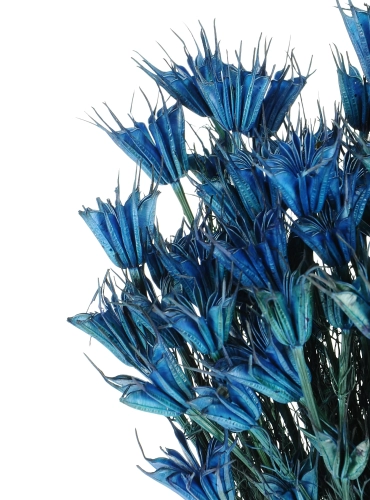
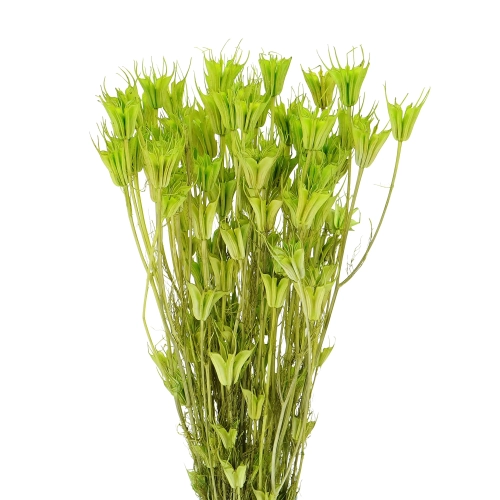
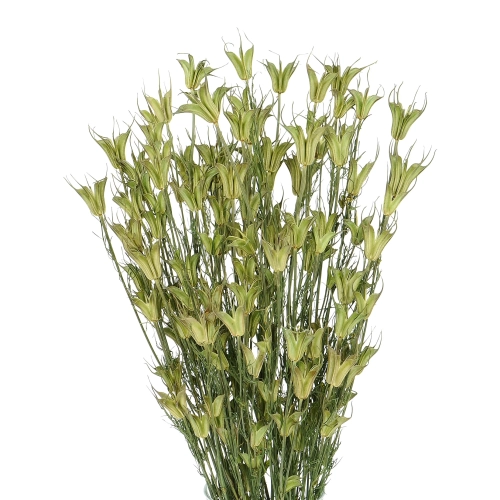
Nigella orientalis, on the other hand, grows to a maximum height of 50 cm. Like the nigella damascena, it develops pinnate leaves. The flowers, on the other hand, are slightly smaller, usually around 4 cm in diameter. They are yellow in colour and have prominent stamens and pistils, which gives them a very interesting appearance. They appear from July to August. The most decorative part of the plant, however, are the seed sacs, which form after the flowers have flowered. They develop singly at the tops of the shoots and resemble a crown in shape. The fruiting bodies then shrivel and burst, revealing the interior, which contains the seeds.
Nigella in the wild and in the garden
Under natural conditions, damask and oriental nigella grow on moderately permeable soils. The plant prefers well-sunny sites, which makes it ideal for growth and development in warm climate zones. In cooler conditions, it is grown in gardens - as an annual species.
In Europe, nigellas are valued by gardening enthusiasts, not only for their aesthetic conditions, but also for their ease of cultivation. As in the natural environment, the plants prefer warm and sunny places. In the shade, they develop fewer flowers. The best substrate for them is nutrient-rich soil with a slightly acidic pH, but they can grow on almost any soil. It is worth remembering that in times of drought, nigella requires watering. However, stagnant water should be avoided, as it can lead to the lower parts of the plant dying and the occurrence of fungal diseases. During the growing season, the plant needs to be fertilised using a multi-nutrient mix. Both nigella’s species are vigorous growers, so it is important to plant the plants at a sufficient distance from each other so that they do not crowd each other.
Uses of Nigella
Nigella damascena’s seeds are used in medicine. The essential oil extracted from it supports the immune and respiratory systems. It also helps to fight diseases caused by parasites. In addition, it’s extract has diuretic and cholagogic effects. It stabilises cholesterol levels and influences the proper functioning of the cardiovascular system. In addition, it helps with beauty, as it has beneficial effects on the skin and hair. It is also worth noting that damask seeds can be used in the kitchen as a seasoning for meat, bread or vegetables.
Nigella damascena and orientalis are both prized by gardeners, although the latter is less popular. Both plants look great in beds. They can be planted as a space-filling species after the spring plants have flowered. They are an excellent choice for rustic, country and naturalistic gardens. They look great in the company of colourful perennials, including periwinkle. They will perfectly complement the evergreen robe with white flowers. They will also form a duo with annual species such as hemlock. It is worth mentioning that damask nigella is a melliferous plant, attracting bees.
Nigella in floristry
Nigella will do well in bouquets. The flowering stems of the plant remain fresh in the vase for a long time. The seed bags, on the other hand, are fantastic for dry bouquets. They are widely used in floristry and make a perfect addition to compositions.
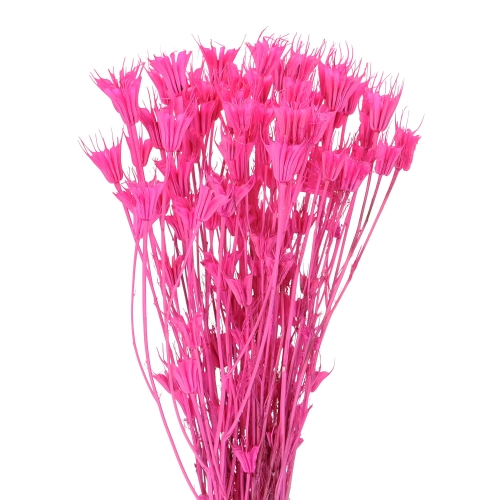
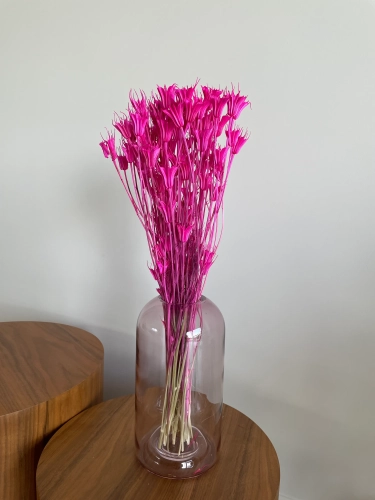
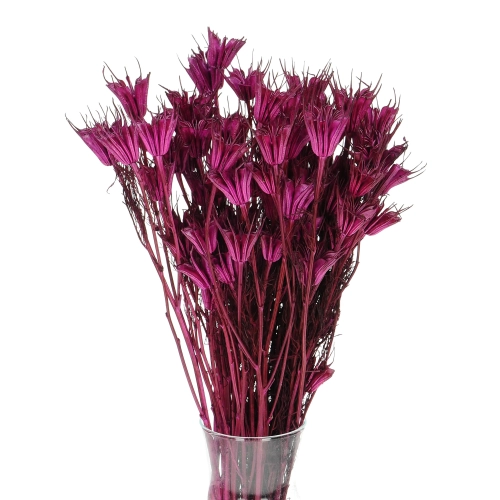
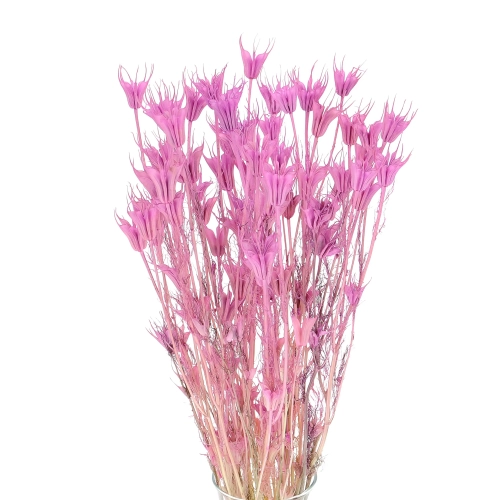
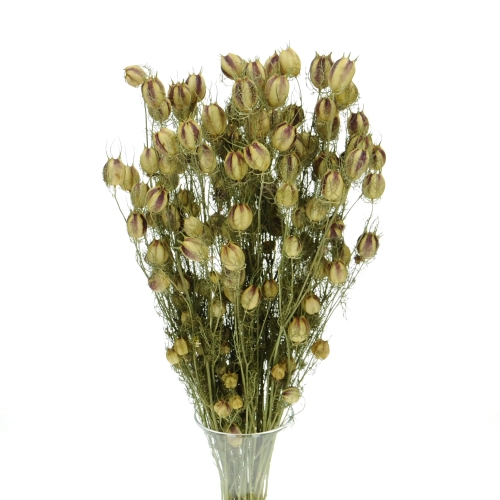
Nigella damascena is distinguished by its green-purple seed-bags, which make it a striking solo or in the company of pink-coloured flowers, such as acroclinium or delphinium, as well as pink-coloured grasses. In addition, it can make an interesting combination with yellow plants, such as helichrysum and craspedia, as well as with white ammobium. It is suitable for bouquets and as a complement to garlands or reeds. Its characteristic sweet fragrance makes the crushed seedpods suitable for adding to potpourri.
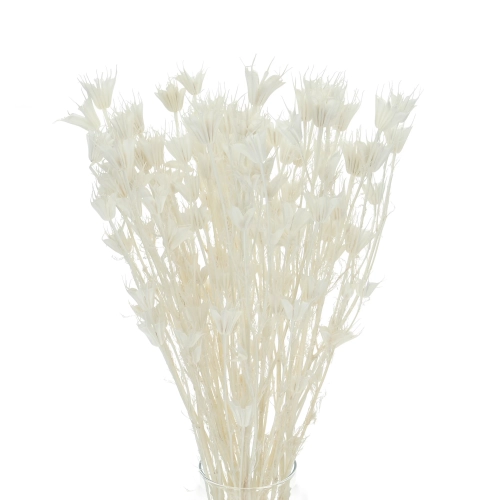
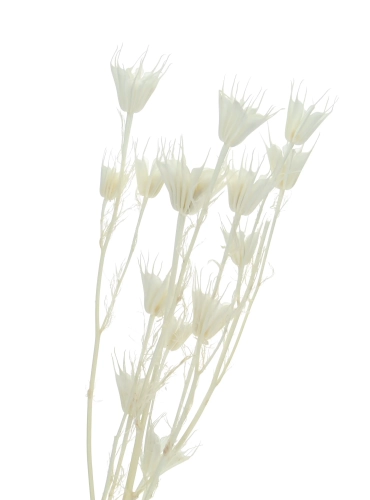
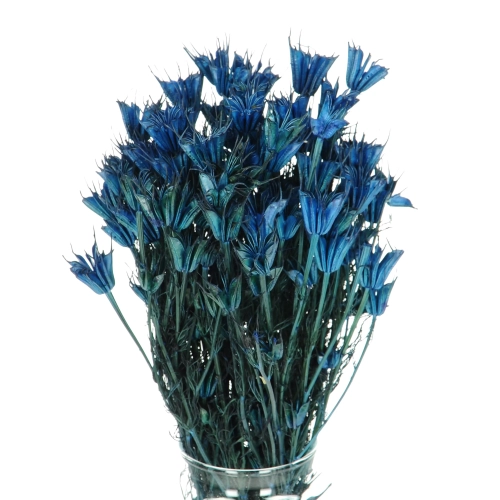
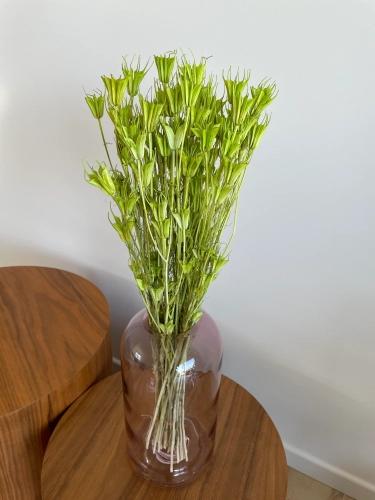
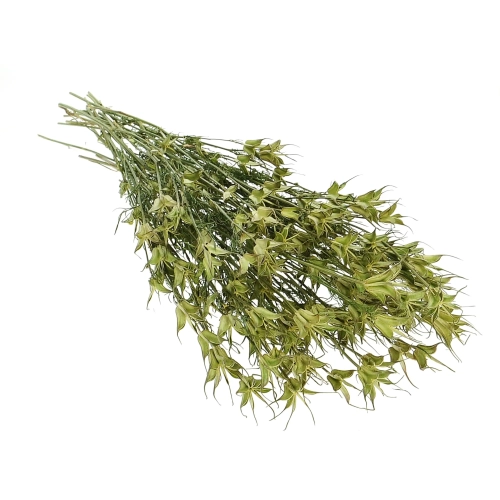
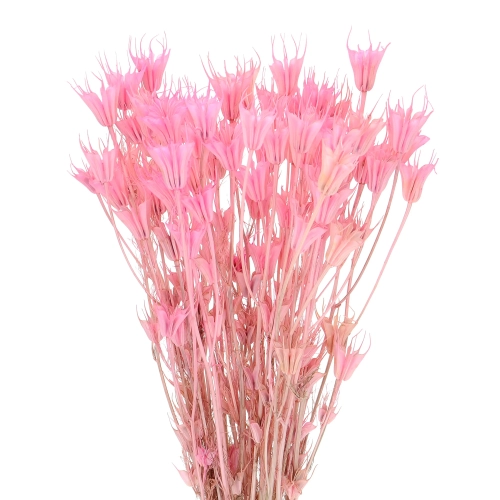
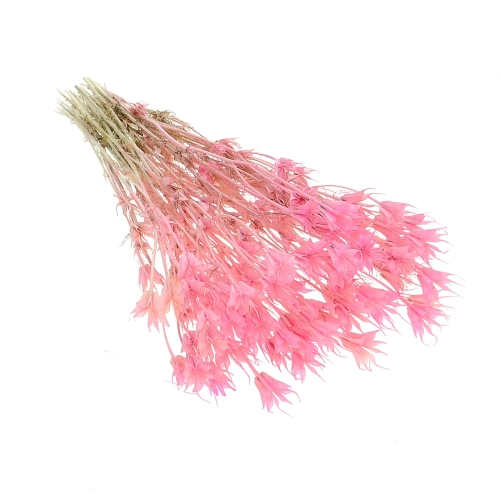
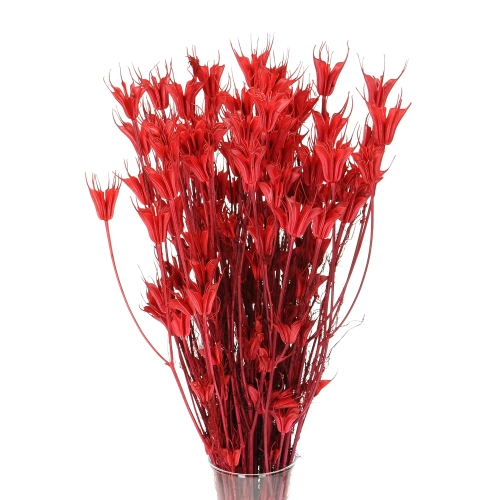
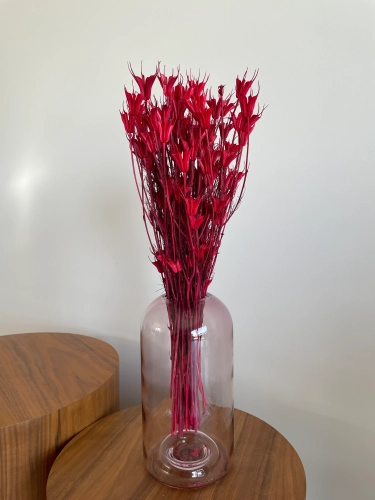
On the other hand, dried nigella orientalis retains the green colour of the seed bags after drying. This makes it suitable for floral compositions for any season - it will go well with any colour scheme. It is also available in a bleached form - ideal for wedding bouquets or communion decorations. Please note that decorative crowns of oriental nigella look beautiful solo. Placed in a vase, they can become an interesting decoration for a space arranged in a traditional, rustic or modern style.
Dried Nigella at Blosmi
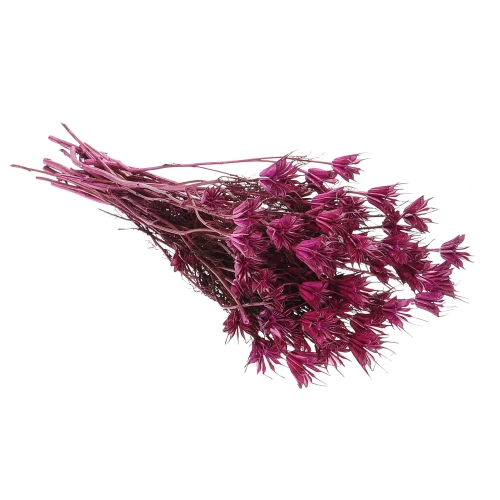
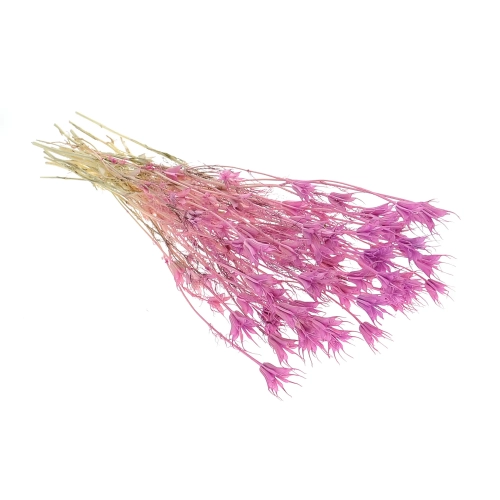
Dried nigella damascena with stems of approximately 40-50 cm in length is available at Blosmi. The bunches are characterised by a weight of approx. 60 g. Dried nigella orientalis is available in natural colours and in a bleached version. The length of the stems is about 40-50 cm and the weight of the plants in a bundle reaches about 80 g. All plants are carefully packed and protected for transport.