Setaria
Setaria, also known as bristle grass, is an annual plant belonging to the Poaceae family. It originates from Asia, although botanists suggest that some of its varieties may also have been found in Europe. In ancient times, it was a cultivated and forage species. Today, setaria can be found on almost all continents. In Poland, there are six known species of the plant that are naturalised or partially feral anthropophytes. Due to their impressive ears, some varieties of setaria are valued by gardeners. When dried, the species is perfect for use in floral arrangements.
What does setaria look like?
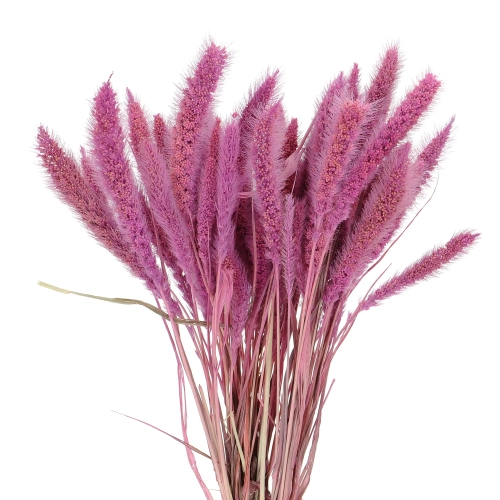
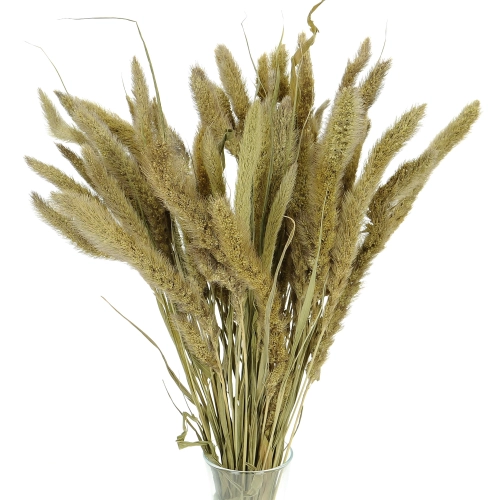
Setaria forms dense clumps from which long, lanceolate leaves and fairly thick, stiff stems grow, ending in spikelets gathered in a tightly packed, cylindrical panicle. It is very distinctive, slightly drooping, which gives the bristle grass an interesting appearance. The inflorescences can take on various colours – from yellow, through green, to pink and purple. The plant blooms from July to September, after which it develops seeds in the form of grains. Setaria stems can grow up to 150 cm in height.
Setaria in natural conditions and in cultivation
Setaria occurs naturally in Asia, North and South America, Africa, Australia and Europe. Currently, it is usually a wild species. Since bristle grass does not have high requirements in terms of soil and environment, it adapts very well to various climatic conditions. The varieties of setaria found in Poland mainly grow on fallow land, wasteland, roadsides and ruderal areas.
Setaria is often found as an ornamental species, cultivated in gardens and flower beds. The plant grows best in sunny locations. It prefers moderately fertile, well-drained soil. It does not tolerate waterlogging, but it can withstand temporary drought. Setaria seeds can be sown directly into the ground, preferably from April to mid-May. The plant is resistant to diseases and pest infestation.
The use of setaria
In ancient times, bristle grass was a cultivated plant. Its seeds were used to make flour and animal feed. Today, only the Setaria Italica variety is used for practical purposes – its seeds are used to make millet for ornamental birds.
Bristle grass is currently valued primarily for its decorative qualities. Setaria Italica and Setaria Pendula are the leaders in this category. Both varieties have beautiful, full ears and tall, stiff stems. How do they differ? Setaria Pendula has drooping panicles resembling fox tails, while Setaria Italica has stiffer, upright panicles. This makes them look beautiful in gardens – both modern and rustic or naturalistic. The species goes well with almost all bedding plants. It also works well as a border and ground cover plant. Just remember to sow setaria at the back of the bed, as it grows to a great height and can obscure shorter species.
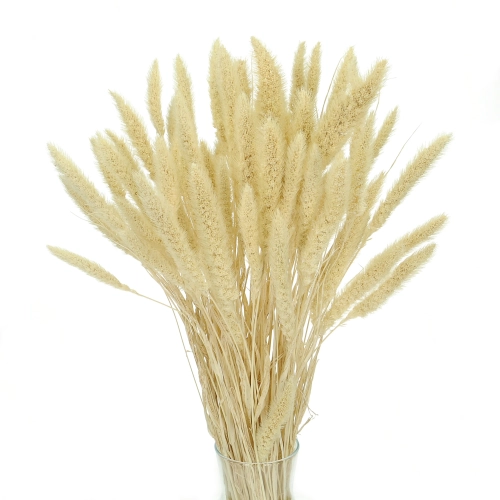
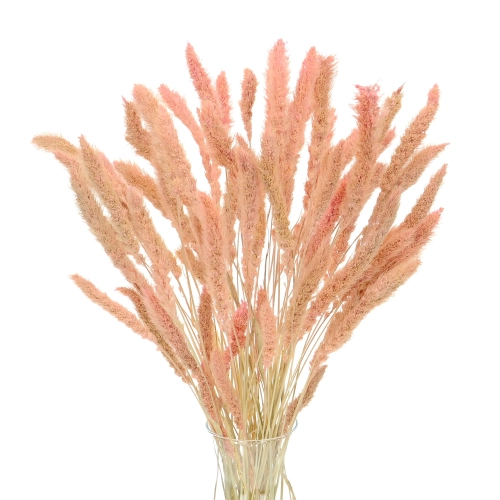
Bristle grass spikes can also be dried. In this form, they can complement compositions made from both fresh and dried flowers. In the latter case, dried setaria will be a perfect companion for the popular ammobium, helichrysum or acroclinium. It will also complement bouquets with an idyllic character, with delphiniums, gomphrena or achillea in the leading role. You can also try original compositions and combine it with lunaria or physalis. Dried setaria can be used not only to create bouquets, but also other decorations made of dried flowers, including wreaths and even Easter palms. The impressive inflorescences of dried setaria are also perfect on their own. Placed in a simple vase, they will become an excellent decoration for both modern and traditional interiors.
Dried setaria at Blosmi
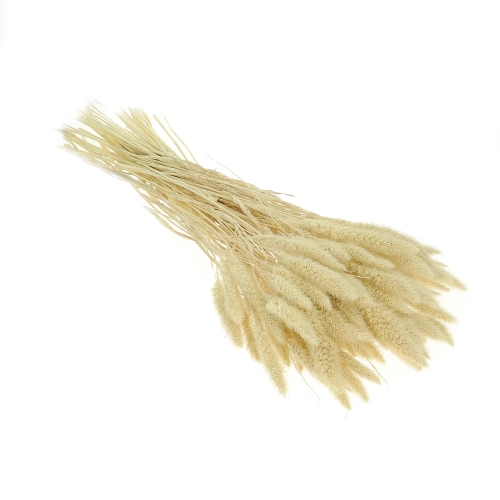
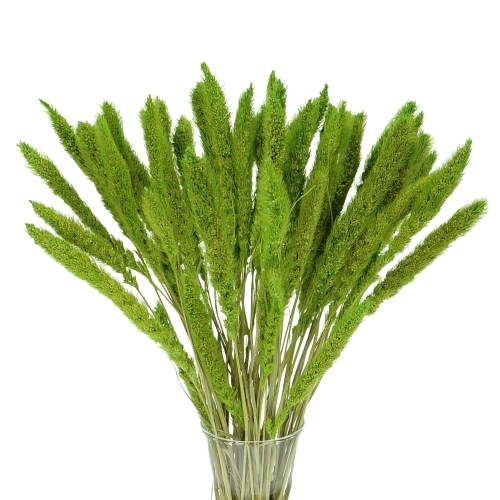
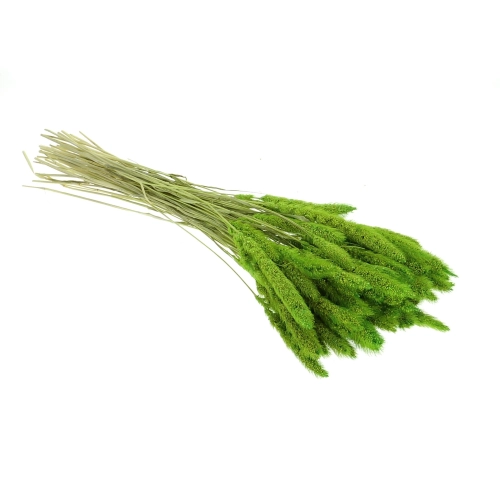
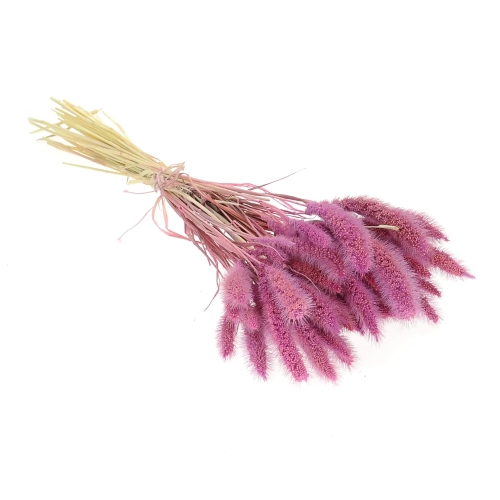
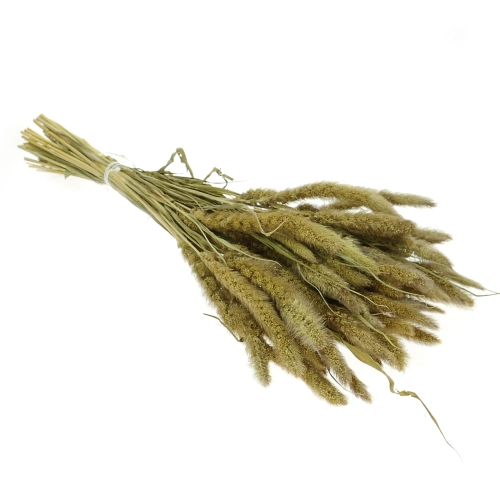
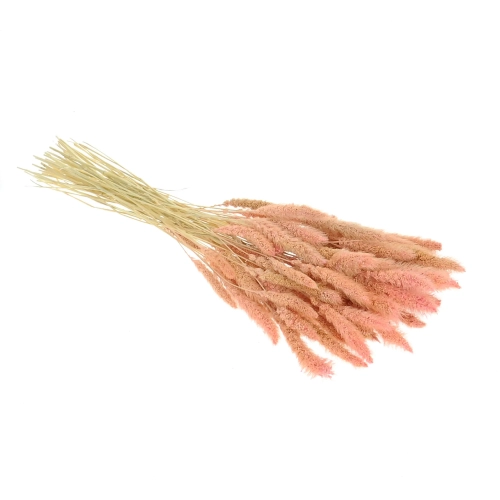
Blosmi offers dried setaria dyed in various colours. Each bunch contains stems approximately 50 cm tall. Their approximate weight is 100 g, which translates to approximately 30 stems per bunch. All plants are carefully packaged and secured for transport.