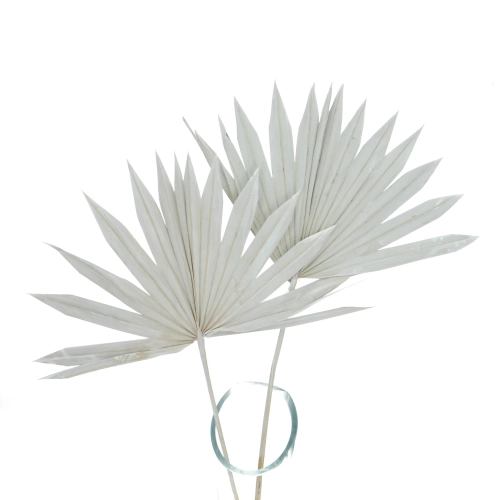
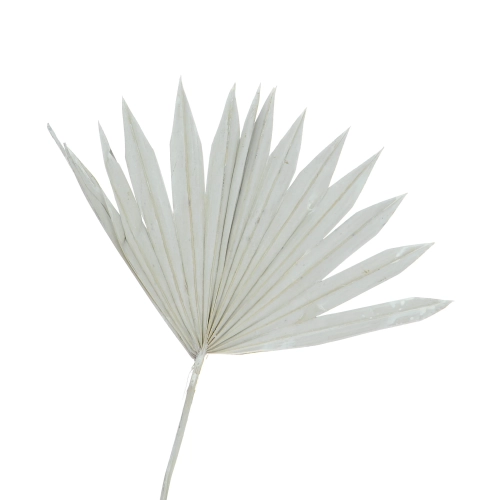
Dried palm leaves
Palm leaves are associated with exotic climates. They work well as boho decorations, interior design elements, and decorations for themed events, such as weddings or birthday parties. Palm leaves also fit in with the less waste trend—after the party is over, dried palm leaves can be reused by placing them in a vase.
Dried palm leaves are very popular among florists. They look great both on their own and in various compositions. Those available in our store come mainly from the dwarf palm (Chamaerops humilis), also known as the European fan palm. It is one of two native palm trees found in Europe. However, it is worth remembering that this species is also commonly cultivated, which means that it inhabits areas outside its natural range.
What do dwarf palm leaves look like?
The dwarf palm is characterized by a low trunk, which very often branches strongly just above the ground, or a single trunk. In the first case, it reaches a height of up to 2 meters, in the second – up to five. At its top, there are fan-shaped leaves with a circular or semicircular blade at the base, divided into several sections – stiff and widely spread. In the axils of the apical leaves, yellow panicle inflorescences grow, which then transform into red-colored fruits.
Dwarf palm - where is it used?
A plant whose natural, dried leaves can effectively inspire admiration at ceremonies or in interior decoration is Chamaerops humilis, commonly known as the dwarf palm. Despite being associated with exotic countries, the dwarf palm is extremely easy to grow and affordable, which is why its dried leaves are increasingly used in floristry (also in Poland). It is an extremely popular type of palm tree in southern Europe, especially in Spain and Italy.
What makes the dwarf pine special?
The dwarf palm is a small palm tree, so it can be successfully planted in pots in the living room, where it will perfectly enliven the interior. It has wide leaves growing from the trunk, which have a characteristic fan-shaped and spreading shape. Beautiful yellow inflorescences can be seen during its flowering period, which occurs in its first years of growth. However, it is worth waiting for the dwarf palm to reach full maturity, as it produces orange fruits during subsequent stages of flowering.
Under what conditions is the dwarf palm cultivated?
The dwarf palm tree occurs naturally in the Mediterranean basin and northern Africa. It inhabits areas from southern Italy to southern Spain and from Tunisia to Morocco. It is most commonly found near the coast, on sandy or rocky sites. The dwarf palm is easy to grow and has few requirements - the plant likes sunny and dry locations.
The characteristic shape of the dwarf palm and its modest environmental requirements make it a species commonly grown in pots. It grows slowly, so when deciding to buy this plant, it is worth choosing the largest specimen possible, which will grow into a stately and impressive specimen. In its natural environment, it can grow up to 4 meters, and when artificially planted and cared for, up to 1-2 meters. Young palms (up to 6 years old) should be repotted every year, while older ones every 2-3 years, which will allow the dwarf palm to absorb the necessary nutrients for free growth. Interestingly, the dwarf palm is resistant to all diseases and pests. It grows best in light, well-drained soil. It prefers sunny or slightly shaded locations. However, it is worth remembering that in Poland it is not suitable for cultivation in the ground, as it does not tolerate temperatures below -11 degrees Celsius.
Use of dried palm leaves
Since dwarf palms are easy to grow, their dried leaves are widely available. They allow you to achieve spectacular floral effects at low cost. They look beautiful on their own – placed in a simple vase. In this form, they are a wonderful decoration for modern spaces. There is also nothing to prevent them from being used in various floral compositions. They work well as a “background” for bouquets, including occasional ones. They look beautiful in hanging arrangements. They are used to decorate walls and arches. They can also be used to create wreaths.
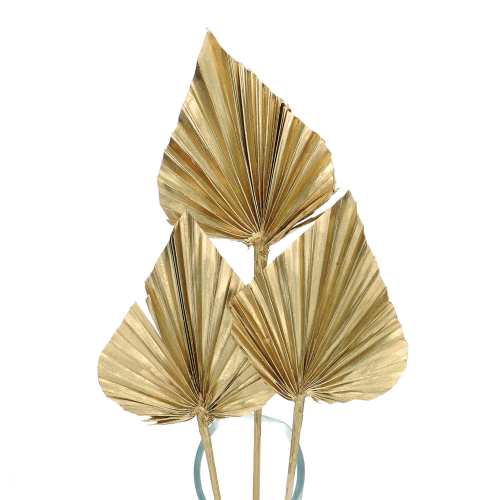
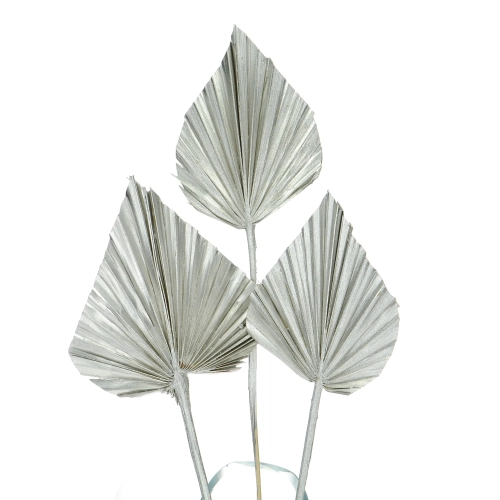
Their distinctive shape makes dried palm leaves – natural or bleached – irreplaceable in boho, tropical, or Hawaiian-style floral arrangements. They also work well in modern bouquets. It is worth remembering that they are also available in dyed versions. Gold and silver ones fit perfectly into glamorous arrangements.
Properly secured palm leaves are also a wonderful decoration for wedding cakes. They are extremely popular, especially at boho or Bali-style celebrations. However, it is important to remember that they are not suitable for consumption. Therefore, they should be removed from the cake before eating.
Ideas for decorations made from dried palm leaves
- bouquets and special occasion arrangements
- vase and container decorations
- door and table wreaths
- decorative arrangements
- 3D floral paintings and framed flowers
- photo backdrops
- hanging arrangements and floral clouds
- arrangements under glass domes
- window displays (visual merchandising)
- props for photo shoots
- floral sets and photo shoots
- creative shipping
- trade fair stand arrangements
- floral spatial decorations
What kind of dried leaves should be combined with dried stain leaves?
Dried palm leaves can be combined with many different types of dried flowers and preserved plants. They look great when paired with exotic specimens such as cotton, protea, banksia, or preserved eucalyptus. They also go well with dried grasses, especially pampas grass, phalaris, and lagurus. There is also nothing to prevent you from combining them with other dried flowers – gomphrena, flax, anaphalis, lunaria, or physalis. Compositions with dried palm leaves can also be complemented with ruscus or amaranth.
Dried palm leaves available at Blosmi
Our store offers several types of dried palm leaves. Natural Blosmi palm leaves come in the form of neat arrows or large and small “fans.”
We sell palm leaves individually. All plants are carefully packed and secured for transport.
Here are the available palm leaf variants:
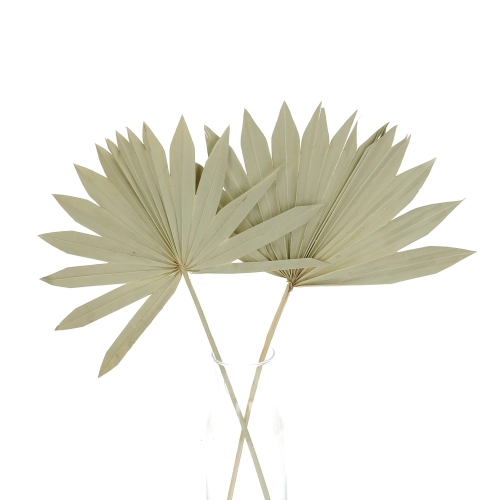
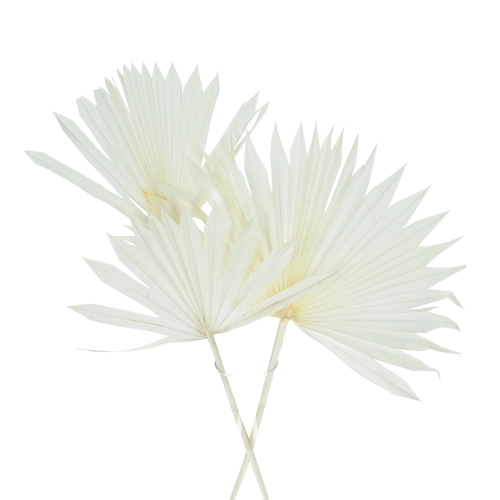
- Palm Sun dried palm leaves, bleached, natural, or gray - have stiff leaves and resemble the setting sun in shape. They are a real must-have for boho-style interiors. Palm leaves are not only used to create dry bouquets, but also as part of wall decorations or to decorate wedding and event walls
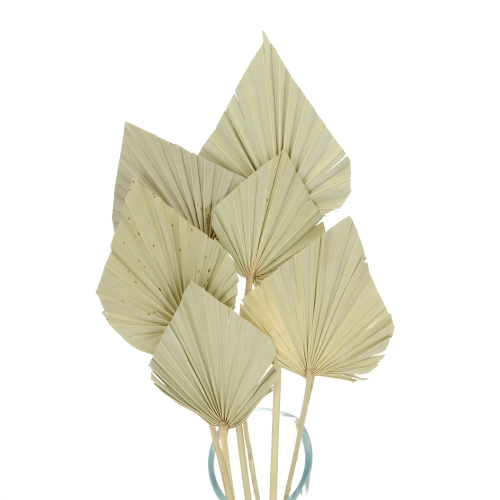
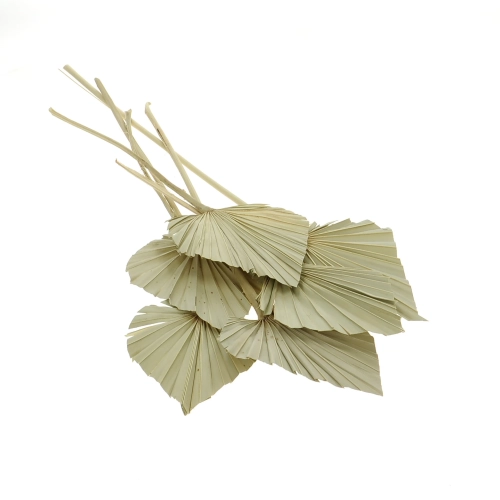
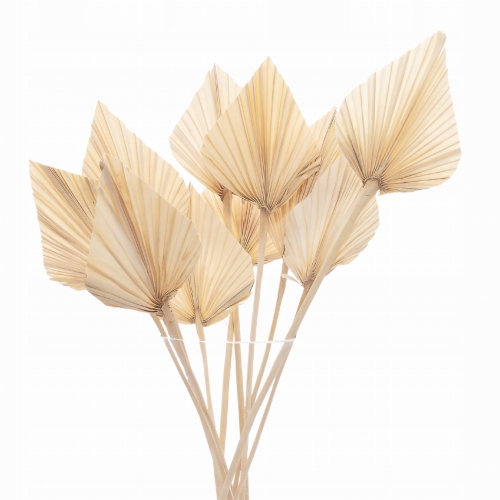
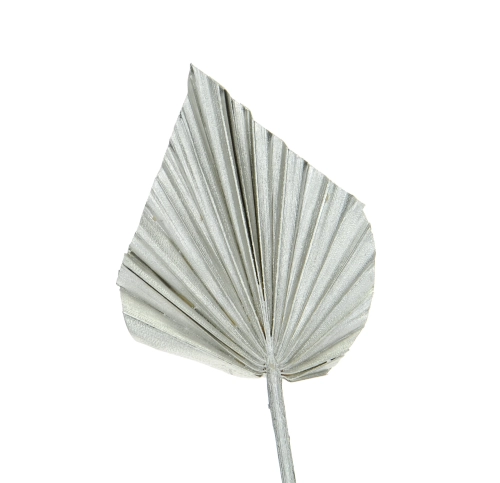
- Dried Palm Spear leaf, bleached, natural, gold, or silver - this is another palm leaf in our range that resembles small arrows, in a light or natural brown-green color. It will be very useful for creating large floral arrangements, as well as dry bouquets. \\\\\\\\
- Dried natural palm leaf, 50-70 cm high – a large palm leaf that brings to mind exotic holidays spent on a sunny beach. It resembles fans, with a natural green-brown color. Dried decorative leaves add variety to boho-style interiors. They can also be used as a decorative accent when organizing Bali- or Hawaiian-style events.