Pepper
Pepper (Piper) is a perennial plant belonging to the Piperaceae family, which includes over 1,000 species. It is native to India and Indonesia. However, pepper is now cultivated in many other parts of the world, including Southeast Asia, Central and South America, Africa, and Madagascar. It is worth remembering, however, that the plant can only grow in tropical and subtropical climates, which is why it does not occur naturally in Europe. Pepper is valued primarily for its taste – bitter, tart, and spicy, making it a great seasoning for many dishes. However, it is also worth remembering its aesthetic qualities. Dried pepper is a fantastic species for decoration in a vase. It looks great on its own or in combination with other dried plants. It is also a wonderful material for handicraft enthusiasts.
What does pepper look like?
Pepper is a climbing plant that can grow up to 15 meters in height. The lower parts of older plants are woody. Aerial roots grow from them, which easily take root in the ground. Characteristic thickenings appear on the trunk and branches at the nodes. Oval, leathery leaves about 8 centimeters long grow from the stem. They have a heart-shaped base and a sharp tip. Pepper flowers are gathered in spike-like inflorescences. They are aquamarine in color and small in size. After flowering, they develop fruits in the form of drupes – initially green, then turning red or yellow-red. The spherical fruits are gathered in fruit clusters and are highly valued in floristry. Pepper can bear fruit all year round for up to 40 years in a row.
Pepper in natural conditions and in cultivation
Under natural conditions, pepper grows in tropical and subtropical areas. It most often grows in tropical forests, where the trees provide excellent support for climbing plants. Nowadays, however, pepper is mainly cultivated on plantations. The plant needs the right conditions to grow. It requires moist, nutrient-rich soil to grow properly. Due to the nature of the terrain on which it is cultivated, it is often necessary to irrigate the soil. Pepper grows best in high temperatures, ranging from 25 to 30 degrees Celsius. High air humidity is also a prerequisite for the plant's development.
Specific environmental requirements mean that pepper is not found in Europe, even in cultivation. It is possible to grow the plant in greenhouses, but this is very difficult and usually ends in failure. It is worth remembering that pepper grown outside its natural environment is unable to develop impressive inflorescences and fruit clusters, which means that it is impossible to obtain the aesthetic qualities of the plant.
The use of pepper
Pepper is mainly used in cooking. It is known as a spice in all cuisines around the world. For this reason, it is often called the king of spices. It owes its characteristic spicy flavor to piperine, which is present in its seeds, as well as to essential oils. Thanks to this, it fantastically enhances the flavor of meat and vegetable dishes.
The presence of piperine means that pepper is also an ingredient added to weight loss aids. This unique alkaloid increases the metabolic rate, promoting weight loss. It is worth noting that in ancient Greece and Rome, pepper was used as a painkiller. It was also recommended for stomach ailments.
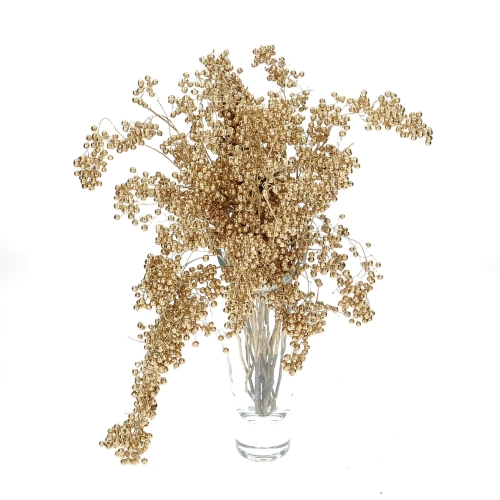
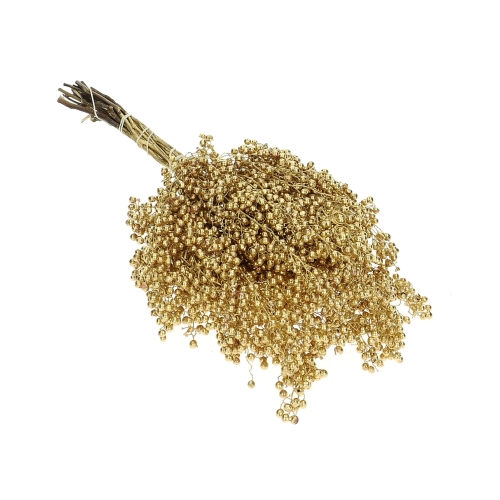
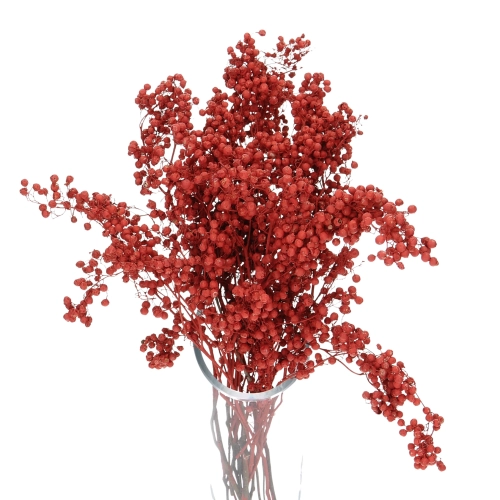
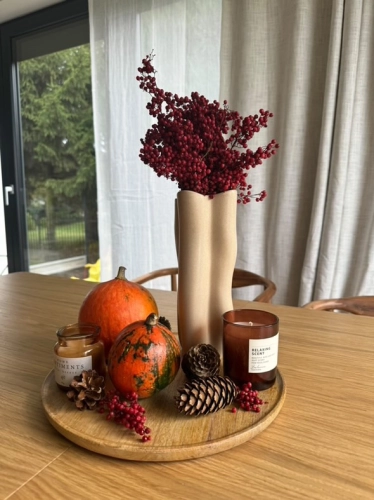
The popularity of pepper as a spice does not prevent us from appreciating its aesthetic qualities. Thanks to a special drying process that preserves the shape of the peppercorns and prevents them from shriveling, a wonderful visual effect can be achieved. Pepper twigs are usually dyed bright red or gold. This makes them a perfect fit for Christmas decorations. They are indispensable for creating wreaths and Christmas arrangements. They look great as an addition to bouquets. Pepper is best combined with exotic types of dried flowers. It looks great in the company of dried cotton twigs, palm leaves, or protea. It can also create an interesting combination with craspedia and grasses – chasmanthium, lagurus, or stipa. There is nothing to stop you from displaying pepper twigs on their own – placing them in a low vase or using them for handicrafts. It is worth noting that dried pepper retains its natural scent, which makes it an even more attractive decorative element.
Dried decorative pepper at Blosmi
Blosmi offers bunches of pepper branches weighing up to 130 g. They are available mainly during the Christmas season. Dried decorative pepper is available in red and gold. To ensure full, abundant bunches, we focus primarily on the weight of the plants rather than the number of branches. The dried pepper shoots are approximately 25-35 cm tall. All plants are carefully secured for transport.