Limonium
Limonium is a perennial plant belonging to the Plumbaginaceae family. It originates from the Mediterranean Basin and Asia Minor. It is now commonly found in temperate climates in both hemispheres, from the Canary Islands, through Europe and Africa, to Japan and Taiwan. In Poland, sea lavender is known as a cultivated plant, planted in gardens and flower beds. Its characteristic parchment-like flowers are perfect for drying, which is why they are used in floristry. They are also valued by handicraft enthusiasts.
What does limonium look like?
There are several varieties of statice, which differ significantly in appearance:
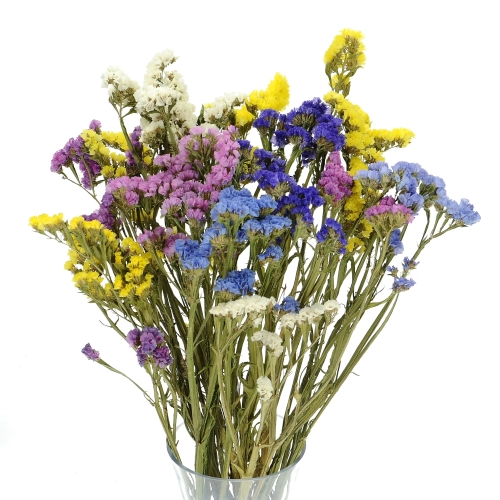
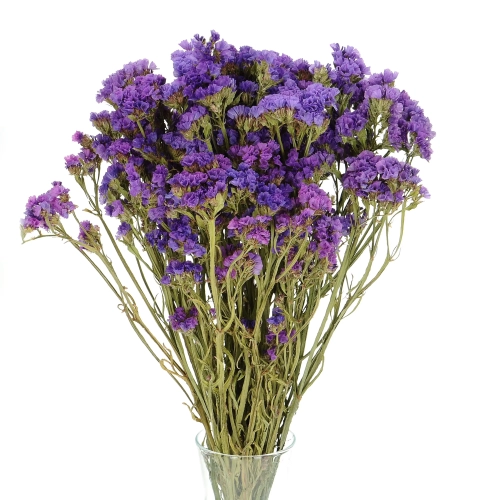
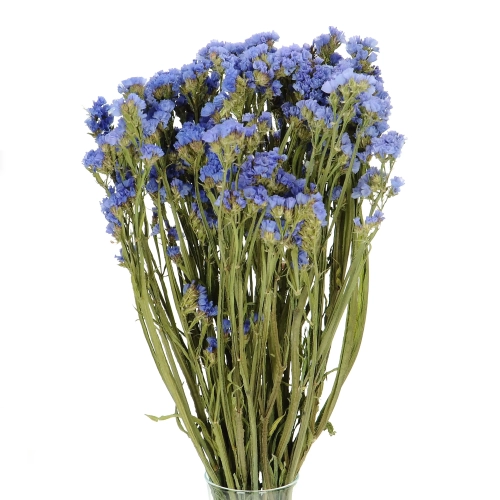
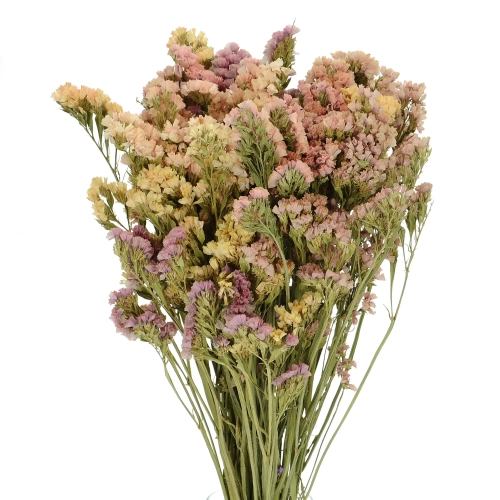
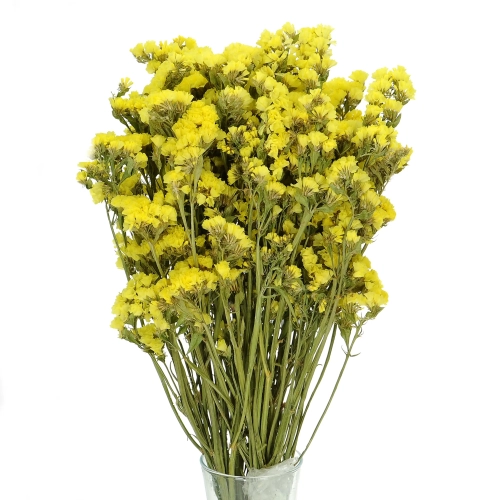
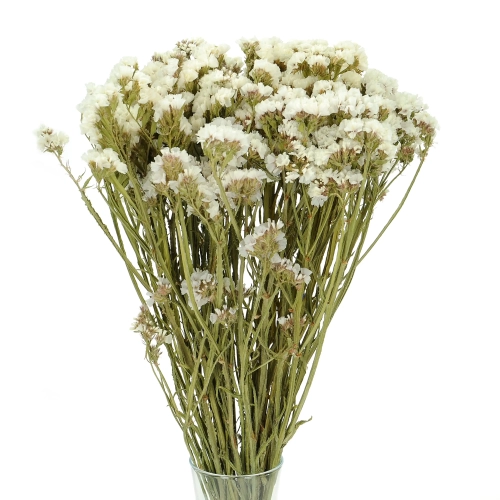
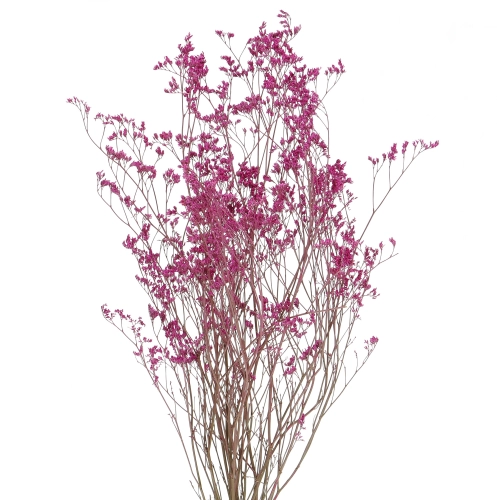
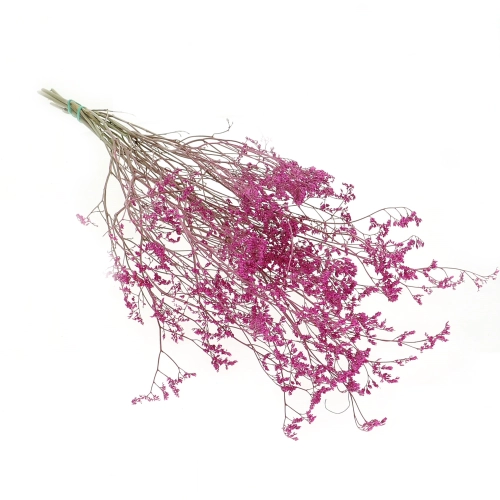
- Limonium sinuatum is the most popular. It grows up to a height of approx. 80 cm. The plant develops stiff stems that branch at the top and are topped with small flowers gathered in one-sided spikes. They are most often white, blue, pink or yellow in colour. They appear at the end of June. The plant blooms until the autumn frosts. At the base, lyre-shaped or feathery, rough-haired basal leaves grow in a rosette.
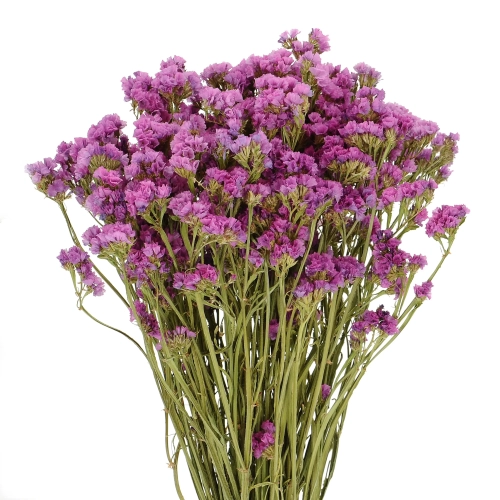
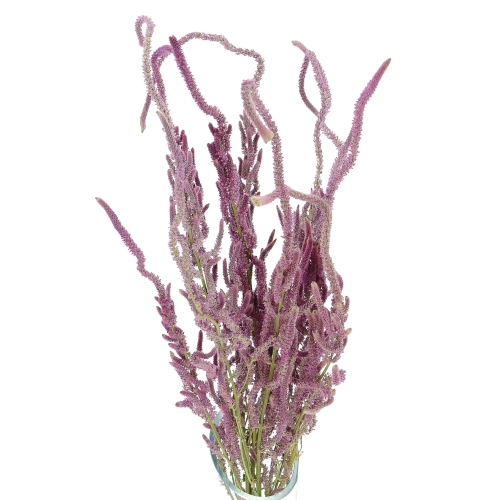
- Limonium suworowii - It has small, intensely pink flowers gathered in slender, very dense spike-like inflorescences, which give it an original wild appearance. It grows up to 80 cm tall. It blooms from July to October.
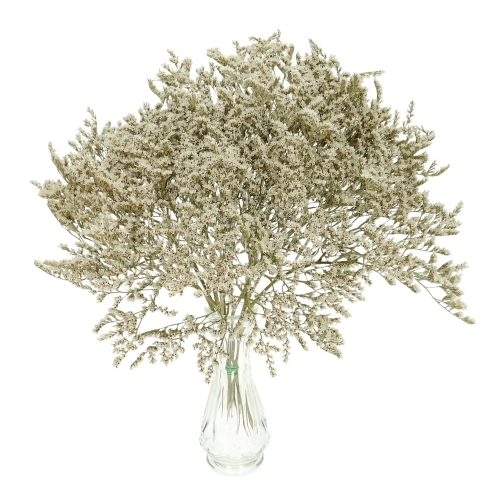
- Limonium tataricum – is slightly shorter – its height does not usually exceed 40 cm. It is characterised by a spreading habit. At the base, it develops long, lanceolate or spatulate leaves gathered in a rosette. The most impressive feature of the plant, however, are the small, white flowers forming panicle inflorescences on branched shoots. The flowers appear between June and September.
- Limonium latifolium - The shortest of the varieties listed. It reaches a height of up to 30 cm. At the base, it forms a rosette of leathery, dark green leaves. Small, light blue flowers are gathered in panicles on branched shoots. They create the impression of a delicate cloud. They appear from July to September and are perfect for drying.
Limonium in natural conditions and in cultivation
Limonium is resistant to adverse environmental factors. Wild plants grow in meadows, wastelands and even ruderal areas. The species is resistant to nutrient deficiency in the soil. It tolerates temporary drought well. Interestingly, limonium can grow in highly saline soils, which is why it is often found on the shores of salt lakes and seas. The plant also occurs in mountainous areas.
Limonium is becoming increasingly popular as a bedding plant. The reason for this is not only its original appearance, but also its ease of cultivation. The plant grows best in sunny locations. In shady areas, it will develop loose and poorly coloured inflorescences. The optimal soil for it is well-drained substrate with not too many nutrients and a pH close to neutral. Statice is resistant to temporary drought. However, it cannot tolerate waterlogging, which can cause fungal diseases. It is also worth ensuring that the plant is regularly weeded.
The use of limonium
An interesting fact is that until recently, the roots of the limonium were a valuable raw material used in tanning. Thanks to their high tannin content, they were successfully used for dyeing leather and carpets. Broom was also used in the production of paints, especially those with black, yellow, green and pink shades.
Limonium sinuatum looks beautiful in flower beds. It works well in naturalistic, rustic and rural gardens. It is irreplaceable in Mediterranean-style garden arrangements. It can also be grown in pots on balconies and terraces. Limonium looks beautiful in the company of various plant species, including daylilies, amaranth, yarrow, feathery carnations and New Zealand flax. It is not an invasive species, so you can safely plant it in flower beds. It is perfect for cut flowers – placed in a vase, it will stay fresh for a long time.
Dried limonium in floristry
However, it should not be forgotten that limonium is a plant valued by florists. It is mainly used to create dry compositions – both bouquets and decorative wreaths or Easter palms. When properly dried, its flowers retain their intense colour and delight with their colours for many months.
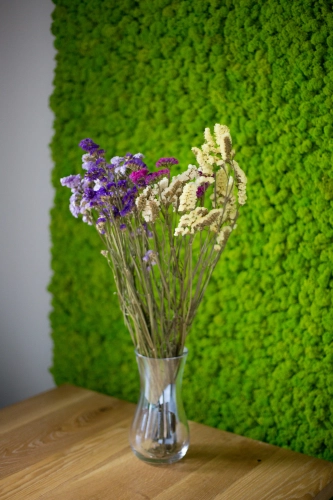
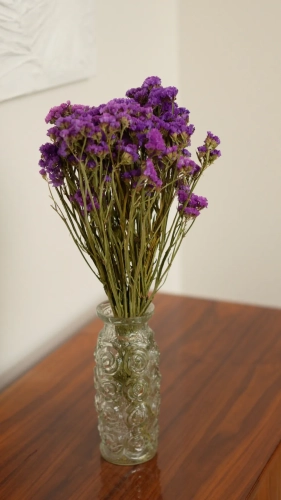
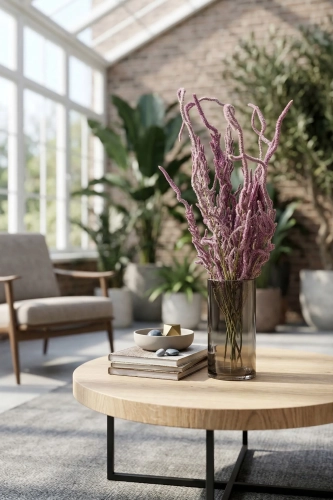
Limonium looks good on its own – placed in a simple glass vase. In this form, it will perfectly decorate a modern interior. Placed in a ceramic pot, it will become an excellent decoration for traditional and rustic arrangements. It can also be combined with other dried flowers. However, it should be remembered that the flowers are quite impressive, so the plant looks best when accompanied by dried grasses and grains.
Dried Limonium can be successfully combined with other dried flowers. It works perfectly in naturalistic compositions. It creates an interesting combination with nigella or dried linum. It can also be combined with echinops or added to ammobium or acroclinium to create a bouquet with a rustic character. It will look beautiful in the company of lunaria. There is also nothing to prevent you from combining it with dried grasses, including lagurus. Let us also add that dried Limonium suworowii is perfect for artistic and abstract compositions with unconventional lines and forms.
In which compositions does dried limonium look best?
- bouquets and special occasion arrangements
- decorations in vases
- head wreaths
- door and table wreaths
- decorative arrangements
- macramé accessories
- decorations for stationery, invitations and place cards
- accessories for resin products and jewellery
- candle decorations
- 3D floral paintings and framed flowers
- compositions under glass domes
- props for photo shoots
- floral set designs and photoshoots
- gift boxes
- trade fair stand arrangements
- floral spatial decorations
Dried limonium at Blosmi
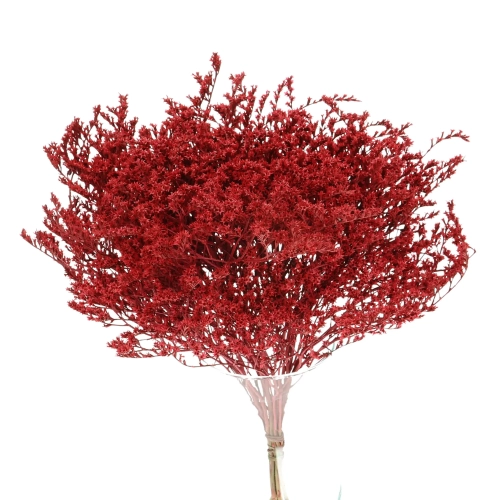
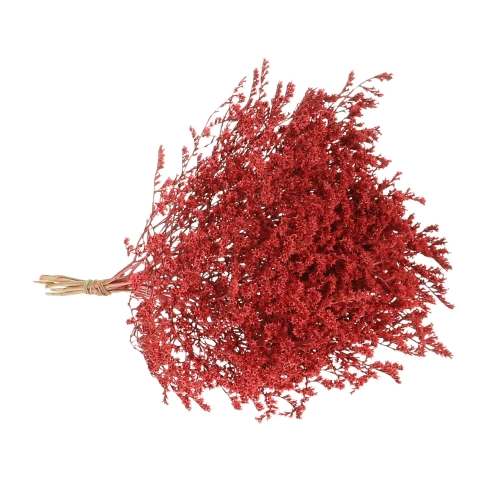
Blosmi offers two varieties of limonium: statice sinuatum and statice suworowii. The bouquets of sinuatum variety are a combination of purple, yellow, pink, and white flowers. The stems are approximately 50 cm tall. The approximate weight of each bunch is 90 g.
Statice suworowii is available in bunches weighing approximately 30-40 g and measuring approximately 50 cm in height.
All plants are carefully packaged and secured for transport.