Olive tree – characteristics
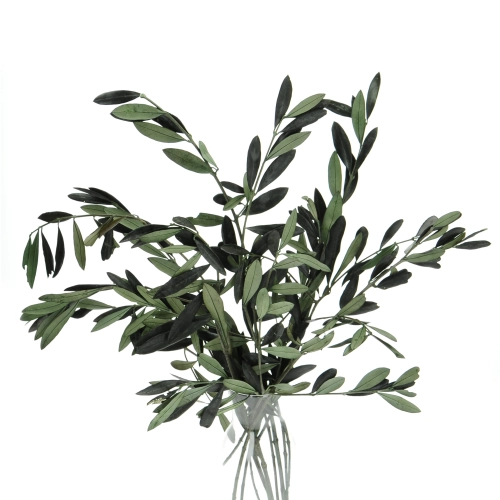
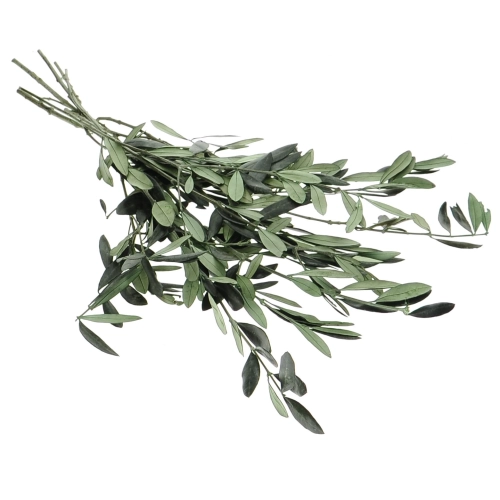
The olive tree is a true icon of the Mediterranean landscape. It is a symbol of peace, wisdom and longevity. Its treasure is undoubtedly its leaves – small, slender, with a beautiful, lanceolate shape. Their beauty lies in their colour. On the upper side, they have a shade of subdued, slightly muted green. On the underside, they are covered with a delicate, silvery down.
The two-tone colour scheme makes the olive branches play beautifully with the light. They shimmer and sparkle in the wind, giving the impression of life. It is a green that does not scream, but brings extraordinary elegance and harmony to its surroundings. It is cool, yet very cosy. The branches are usually slender and delicate, which adds to their lightness.
Plant preservation – what does it mean?
The stabilisation process is a special technique that allows the natural charm of plants to be preserved for a very long time. It all starts with careful selection. Only the healthiest, most beautiful olive branches are chosen at the peak of their growth.
Next, under special supervision, the natural juices circulating in the plant are replaced. Glycerine, a substance well known in the cosmetics industry, for example, is used for this purpose. The leaves and twigs absorb the solution, which preserves their structure from the inside.
The effect is stunning. The olive leaves remain completely natural to the touch and springy. They retain their authentic shape and, most importantly, their beautiful silvery-green colour, which is further enhanced with dye. They look exactly as if they had just been picked from a tree in a sunny grove.
Twigs prepared in this way are now durable. They require absolutely no care. They do not need to be watered, sprayed or placed in the sun. On the contrary, they prefer shady places, away from moisture and direct heat. They do not wilt, turn yellow or lose their leaves.
Olive accents in interior design
Olive branches are an extremely versatile and universal decorative material. Their subtle beauty suits many styles – from minimalist, Scandinavian, boho and rustic to classic elegance. They bring a breath of freshness and lightness.
They are a wonderful base for long-lasting bouquets. Wedding florists love them for their romantic and noble character. A few olive branches can add lightness and natural charm to the entire composition. They are perfect as a stand-alone decoration. Simply place a bunch of olive branches in a simple ceramic or glass vase to create an impressive, minimalist decoration for a table, chest of drawers or bedroom windowsill.
They are also an interesting material for creating wreaths and garlands. A wreath made entirely of olive leaves, hung on a door, wall or placed on a table as a centrepiece, looks extremely stylish. They can be used to decorate mirrors, picture frames or as part of table decorations for formal dinners.
Olive leaves with other dried plants
The silvery green of olive leaves provides a wonderful backdrop for many other plants, both preserved and dried. It looks beautiful when accompanied by other preserved plants such as eucalyptus or ivy – together they create a harmonious duo reminiscent of delicate, sun-drenched Mediterranean gardens.
When it comes to contrasting textures, delicate olive branches go wonderfully with soft cotton flowers. The combination of various smooth leaves and fluffy white balls creates a cosy effect. Olive leaves look just as good with small spikelets of canary grass or natural avena spikelets.
In colour compositions, olive leaves love the company of white, cream, beige and all pastels, especially powder pink. They also look great with natural materials – light wood, raw linen, jute, clay pots or even cool, smooth stone. At the same time, they bring calm and the timeless charm of nature to any interior.