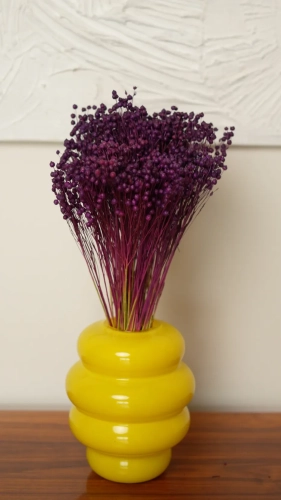
Linum - flax
Common flax (Linum usitatissimum) is a plant belonging to the Linaceae family. It originates from the Middle East, although for thousands of years it has also been cultivated in other parts of the world, including Egypt, Greece, Italy and Poland. Initially, flax fibres were used to make threads, ropes and fabrics. Over time, oil began to be extracted from its seeds. Today, it is widely known that common flax is widely used in various industries. However, few of us realise that in recent years it has gained popularity as an ornamental plant. It looks particularly interesting after flowering, when characteristic capsules appear at the ends of the shoots. In this form, it is an ideal plant for dry bouquets.
What does flax look like?
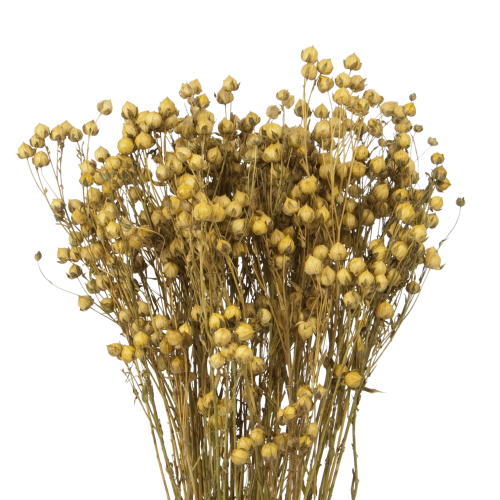
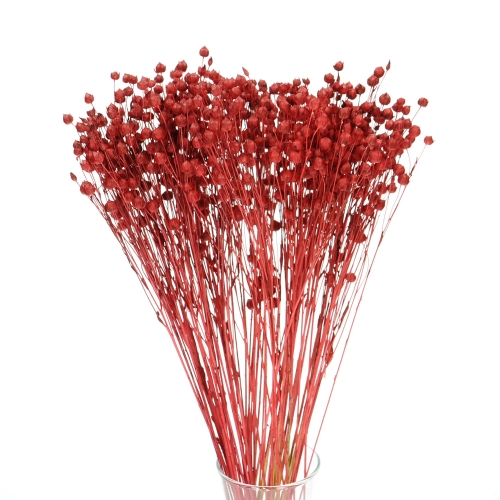
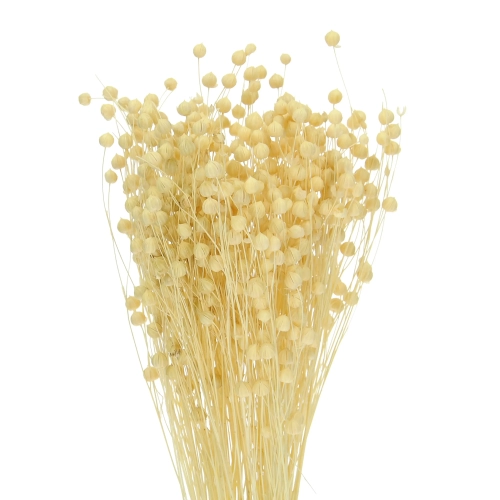
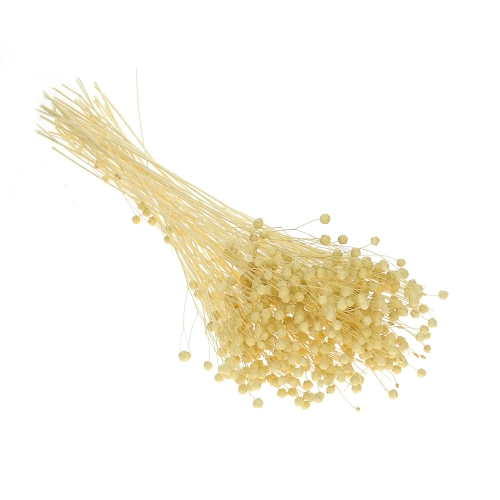
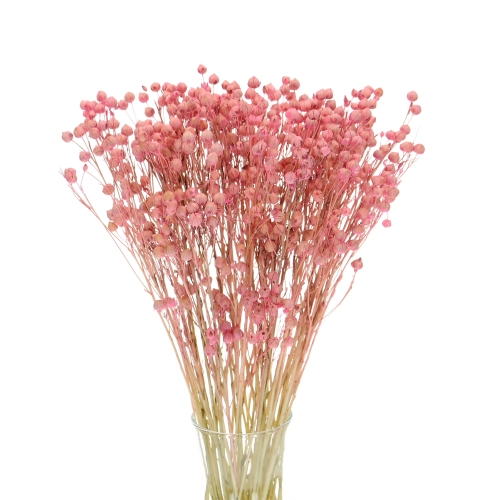
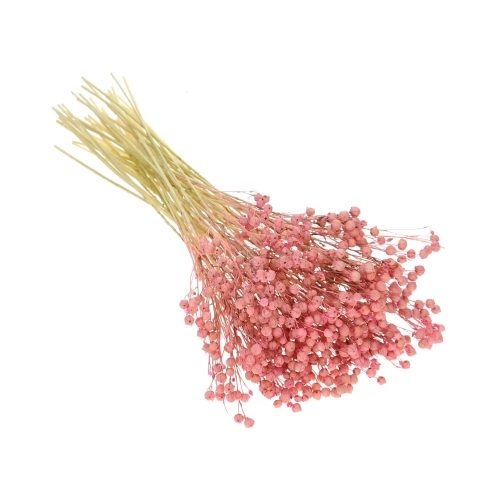
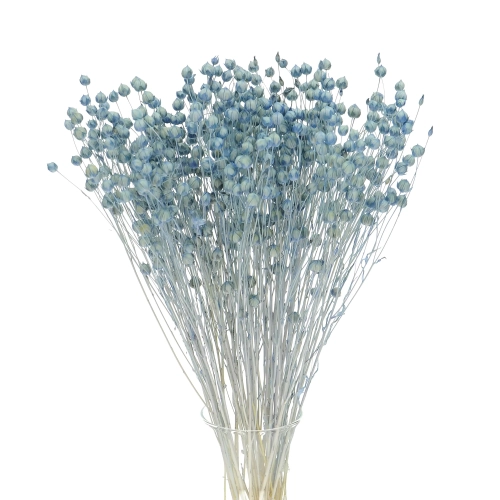
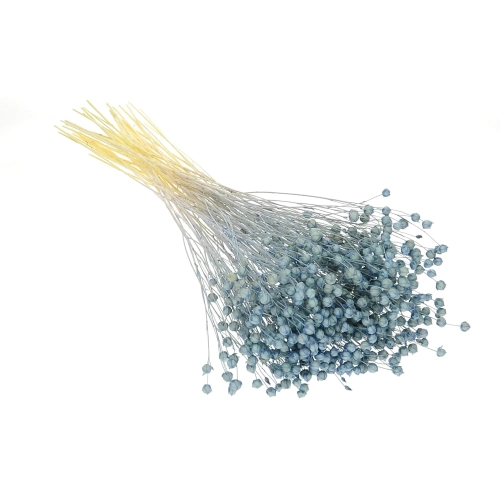
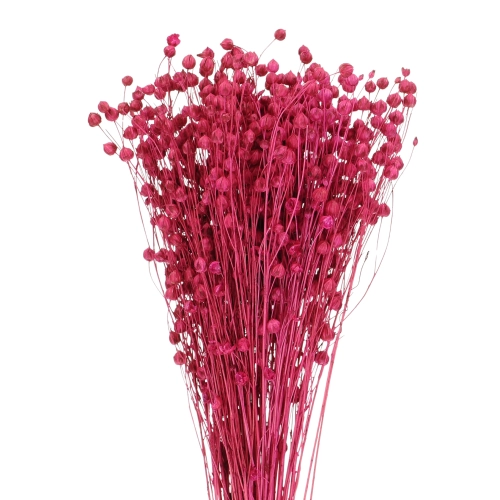
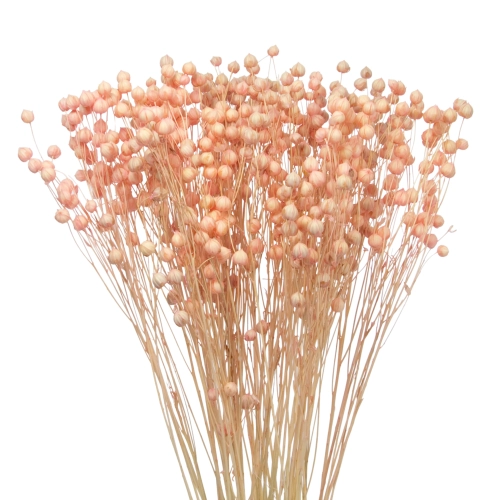
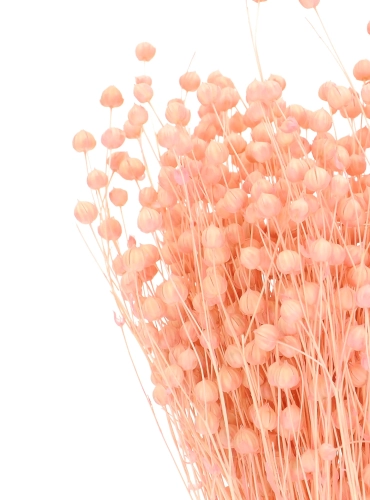
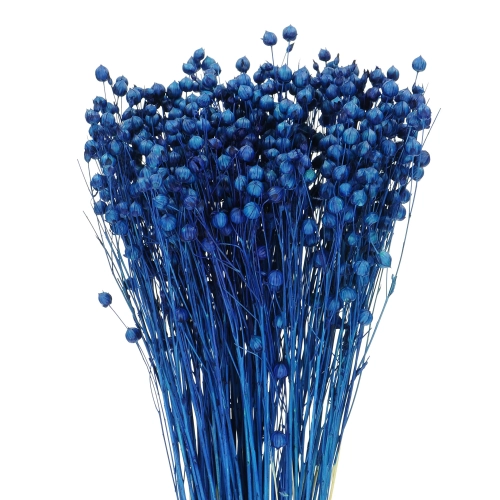
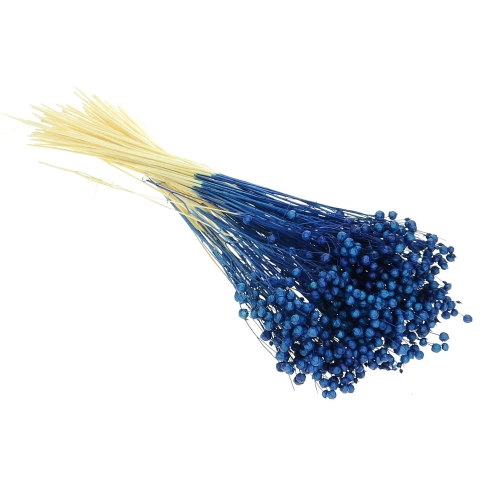
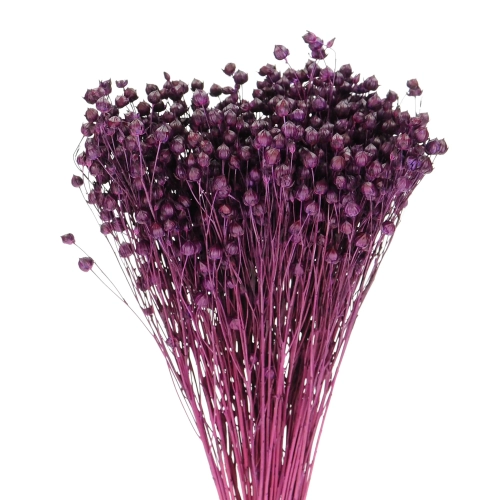
Flax, apart from being one of the most useful and oldest cultivated plants, is also charming. It has stiff, branched stems ranging in height from 30 to 70 cm. Five-petalled flowers appear at the ends of the shoots. They are usually blue in colour, although there are varieties of common flax with white flowers. The leaves are lanceolate and inconspicuous. After flowering, the plant develops fruits in the form of round, bulging capsules filled with flattened, oblong seeds. In this form, flax is dried and then used to create compositions of dried flowers. It can be used in its natural colour or bleached or dyed.
In what form is flax suitable for drying?
Flax seed pods give the plant a very interesting appearance. As this species has a relatively low water content, it is ideal for drying. This allows it to be preserved for many years and then used in compositions with both fresh and dried plants. But that's not all, because dried flax can be bleached or dyed. This creates an even wider range of floral inspiration.
Flax in industrial cultivation and in the garden
Linum does not currently grow in the wild. It is a cultivated plant found in various parts of the world. It is primarily a useful species from which fibres and oil are obtained. In recent years, however, flax has become increasingly common in gardens. Its blue flowers are a wonderful decoration for flower beds and rockeries. The reason for the increasing popularity of this species is its modest environmental requirements. It grows best in sunny locations. Flax needs calcareous, well-drained soil, as it does not tolerate waterlogging. However, it is quite resistant to drought. However, it is worth watering it gently, as a lack of water in the soil can result in poorer flowering. On the other hand, do not overdo the fertilisation of the soil, as this can cause the stems to become too exuberant and prone to lodging.
Flax is usually grown as an annual plant. Although it is classified as a perennial, the weather conditions in our country – particularly severe frosts – are not conducive to the plant overwintering. Flax propagates mainly from seeds, which should be sown in the ground at the end of April. The flowering period is from the end of June to the end of July. Flax looks great in the company of other plants: carnations, bluebells, yarrow, rudbeckia, echinacea and flowering foxglove. It also works well in flower meadows. After flowering and seed capsule formation, flax shoots can be cut and dried.
Uses of linum
Linum is one of the most versatile plants on earth. It is estimated that its processing is close to the idea of ‘zero waste’, which in practice means that it generates almost no waste. Fibres for the production of threads and fabrics are obtained from flax shoots. The residues are used to make chipboard used in furniture and construction. Flax seeds, on the other hand, have valuable nutritional properties. They are rich in vitamin E and omega unsaturated fatty acids. For this reason, they are added to foods such as smoothies, muesli and salads. They are also used in medicine. Flax has proven to be effective in alleviating digestive problems. It also works well in the form of compresses for wounds or burns. It is widely used in the cosmetics industry. Flaxseed meal, produced after extracting the seeds, is used in the production of animal feed.
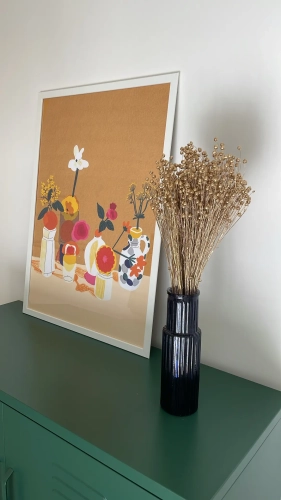
Common flax is an excellent plant for dry bouquets. It is harvested after flowering, when it develops spherical seed capsules. The species can be dyed. This makes it perfect for various compositions – its shade can be easily matched to the colour scheme of the decoration. Dried flax can be used to complement bouquets. It also looks beautiful on its own, placed in a glass vase. In this form, it is a wonderful decoration for interiors decorated in both classic and modern styles. Above all, however, it is worth remembering that dried flax provides endless decorative inspiration and encourages you to create your own original compositions.
Dried linum with other plants
Dried flax looks great on its own or in combination with other plants – it goes well with most species. However, in the dried plant category, native plants such as ammobium, helichrysum, nigella, achillea and acroclinium are best suited for this role. Flax can also be combined with dried grasses, including lagurus, and dried grains such as wheat, avena or triticale. It also works perfectly as a subtle filler in bouquets composed of many plant species. Its wide range of colours makes it easy to match with almost any composition.
Dried linum in interiors and as a gift idea
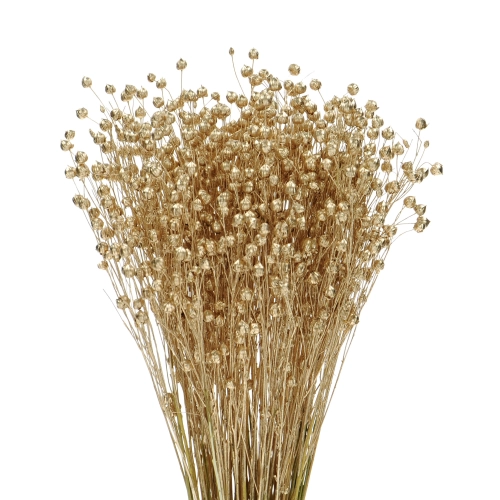
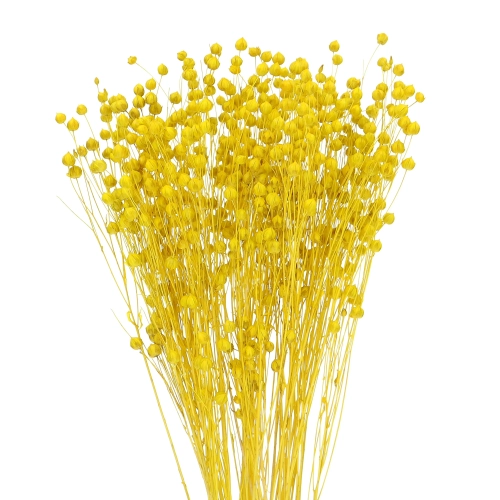
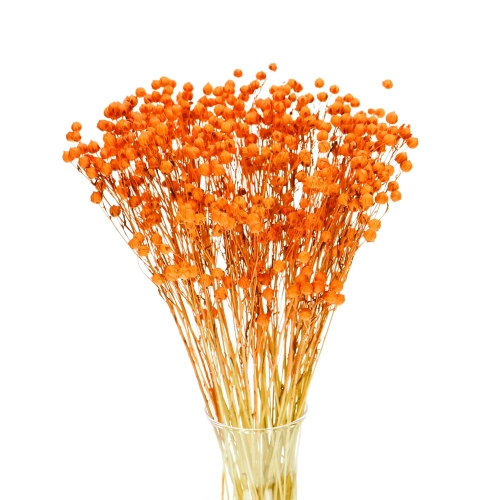
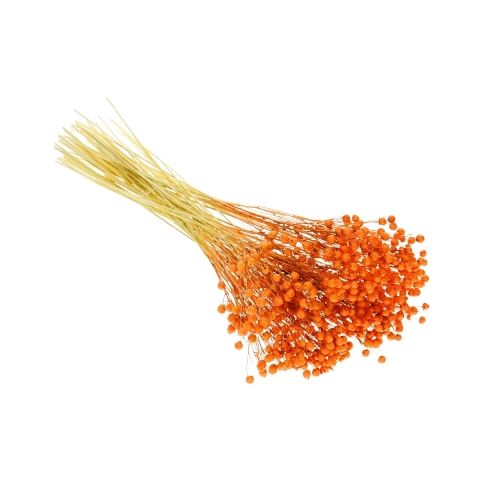
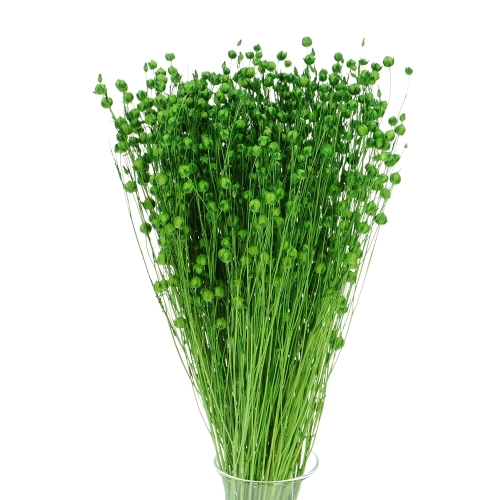
Dried flax fits perfectly into both rustic and modern interiors. In the former, plants in natural colours or warm shades – yellow, orange or pink – are a great option. Dried flax dyed in cool colours – blue or green – is perfect for contemporary arrangements. Bleached flax will also look great in them. Golden linen, on the other hand, will add sparkle to the space and accentuate its glamour. A bouquet of linum can be placed on a table or chest of drawers. It also works well as a gift idea. It can be an alternative to cut flowers given on Mother's Day, Grandmother's Day, birthdays or other occasions.
Where can dried flax be used?
- bouquets,
- wreaths and garlands,
- decorative arrangements,
- seasonal decorations,
- vase decorations,
- corsages and buttonholes,
- decorations for invitations and greeting cards,
- compositions under glass domes,
- garlands,
- suspended arrangements,
- decorative element for candles,
- macramé.
Dried Linum at Blosmi
Blosmi offers dried flax in bouquets weighing approximately 80 g. In addition to plants in their natural colour, you can choose from flax dyed green, blue, red, pink, orange and yellow. Bleached flax is also very popular, as it goes wonderfully with almost any dried flower arrangement.