Gypsophila
Gypsophila, also known as baby’s breath, is a perennial plant belonging to the clove family. In its natural habitat, it is found in southern Europe and Asia. It is also found in Africa and Australia. In Poland there are 8 species of gypsophila growing in the wild and several bedding varieties. The most popular native plant is commonly found in the lowlands. It grows on roadsides, wastelands, river banks, forest roads and damp sands. The delicate, small flowers of both plants make fantastic additions to compositions - bouquets, garlands or other decorations. They also look great solo.
What does gypsophila look like?
Gypsophila catches the eye with its huge number of tiny flowers, which can range from white to light pink to purple. It is estimated that there can be as many as 1,000 individual flowers on a single plant. Broom grows to a height of around 120 cm and can be up to 100 cm wide. It has heavily branched yet sparsely leafed stems that rise upwards. The fine, lanceolate leaves are arranged alternately and almost imperceptible in the cloud of the plant's delicate flowers. The flowering period of the gypsophila is from June to September. The plant should be pruned regularly. Its regenerative abilities mean that it rapidly sprouts new shoots, which are soon covered with flowers.
Growing gypsophila in the garden
Gypsophila can be safely grown in the garden. The plant has few requirements and is resistant to pest invasion - the exception being slugs. The only thing that needs to be done is to ensure a suitable growing location. Broom grows best in a sunny location. It is ideal for use on rockeries and as ground cover in beds. It looks great in the company of plants that have a distinctive appearance - showy flowers or intense colouring, with which it acts as a “filler”. Gypsophila produces fewer flowers in shady positions, which reduces its decorative value.
Loose and well-drained soils with a slightly alkaline pH are best for growing phloem. It also grows well on stony ground with poor nutrient availability. The plant does not require fertilisation. With its sturdy tap roots, the plant can withstand periods of drought without any problems. However, it does not tolerate stagnant water. If the substrate is too wet, fungal diseases will occur and the plant will die. Gypsophila is a hardy species. In the coldest regions of the country, however, it is advisable to cover its positions during the winter.
Gypsophila - not just for bouquets and decorations
It is also worth remembering that gypsophila has more than just decorative qualities. Years ago, an extract from the gypsophila root was used in medicine as an expectorant. Nowadays, it is added to herbal remedies for diseases of the throat, larynx and upper respiratory tract. Bastard root was also used as a laundry detergent for delicate fabrics. The sapoins isolated from it are also used in foam extinguishers.
Gypsophila in floristry
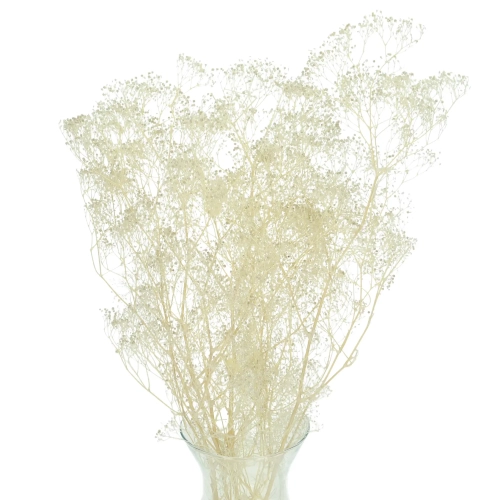
Gypsophila is a plant that has been valued in floristry for many years. It has been cultivated in England since 1759. Years ago, both cut and dried gypsophila was used to fill rose bouquets. This tradition has continued to this day, although nowadays gypsophila offers many more decorative possibilities. The subtlety of the plant makes almost all dried flowers look great in its company. Incredibly malleable and versatile, it is prized by the world's best florists. It appears in wedding and special occasion bouquets. It complements dried flowers for the vase and species arranged in wreaths decorating the wall. It can be used to decorate invitations or wedding vignettes. It is indispensable when creating garlands for weddings or communions. Recently, dried gypsophila has proven that it also looks great solo - especially when placed in a transparent glass vase. In addition to dried gypsophila, preserved gypsophila also deserves attention. Thanks to a special treatment involving the replacement of water with a preservative, it is more flexible and retains its natural appearance. It does not crumble, making it easier to work on decorations.
Ideas for using dried gypsophila
Dried gypsophila can be used to create dry bouquets for the home, office, hotel, restaurant or other venues - including those for events. It is an interesting choice for flower boxes. It also works well in hanging compositions, so-called floral clouds, and as a decoration for arches or photo walls. In addition, dried gypsophila is indispensable for creating garlands to decorate walls, as well as various flower arrangements.
What's more, gypsophila plants can be used to create special occasion decorations. It looks beautiful in wedding bouquets and corsages and as a pin for the groom's buttonhole. It is an exceptionally graceful floral material for creating garlands for the Holy Communion - also those consisting only of gypsophila. It can also be used to decorate tables - either by arranging individual sprigs at place settings or guest vignettes, or by placing them in small glass bottles.
Dried gypsophila will be appreciated by lovers of handicrafts. The tiny flowers are perfect for embedding in resin. They are therefore suitable for making jewellery or bookmarks. They can be used to decorate greeting cards and invitations - especially those made using the scrapbooking method. They can also be used in macramé and in very effective compositions under glass.
What decorations to use dried gypsophila for:
- Bouquets for vases
- Flower boxes
- Suspended arrangements
- Special occasion bouquets - also wedding bouquets
- Corsages
- Head wreaths
- Door wreaths
- Arrangements in a glass dome
- For embedding in resin
- Macramé
- Greeting cards and invitations
Gypsophila with other dried flowers
We will not be committing malpractice if we say that with all of them. Gypsophila is an extremely versatile plant. It looks great in the company of other species, including cotton, lunaria, fennel or lagurus. It can be combined with nigella or achillea. There is nothing stopping you from adding it to ‘spiky’ bouquets in which thistle, echinops or eryngium play the leading role. Of course, it doesn't stop there, as gypsophila will complement dried grasses, including stipa or briza, and even preserved eucalyptus.
Gypsophila at Blosmi
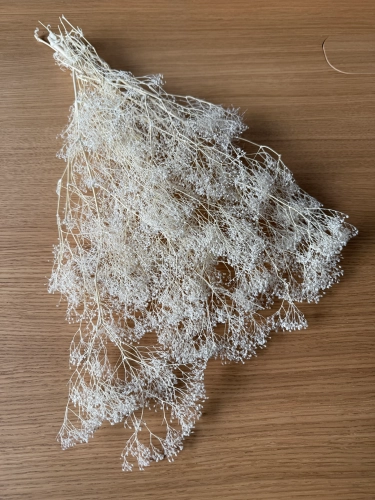
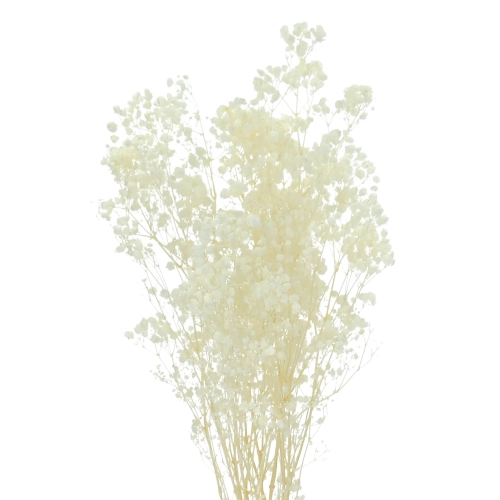
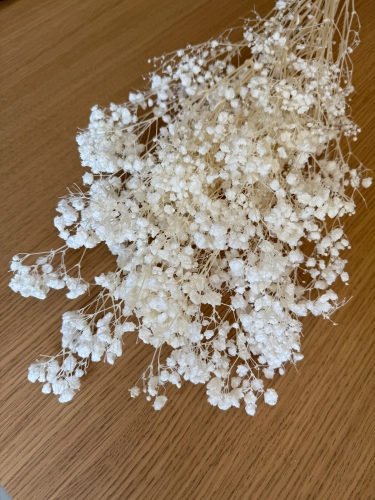
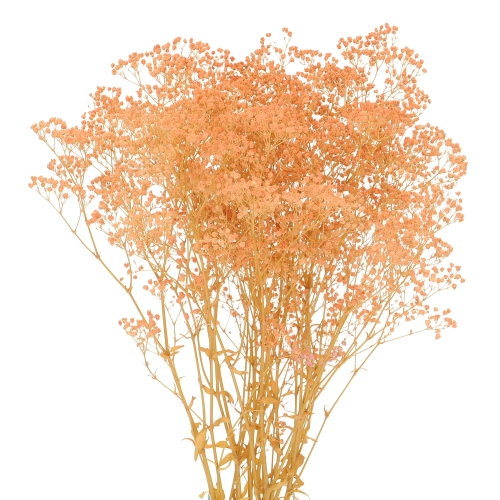
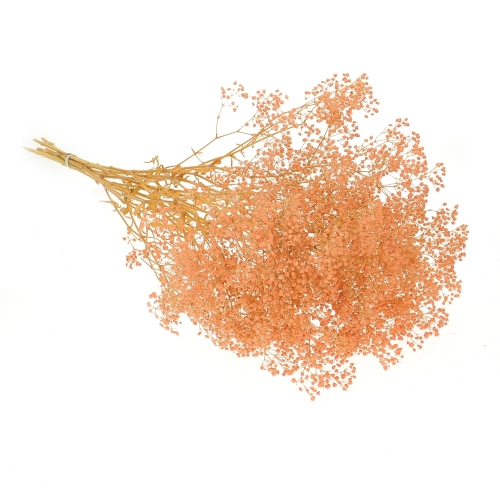
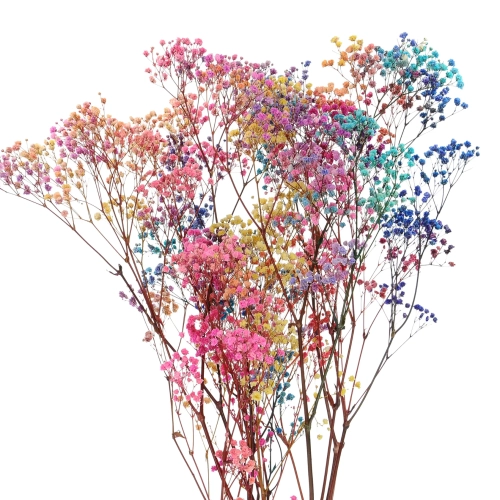
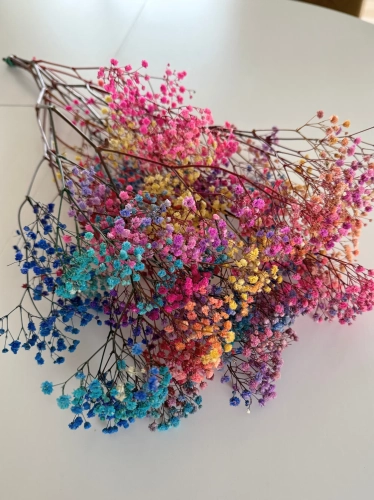
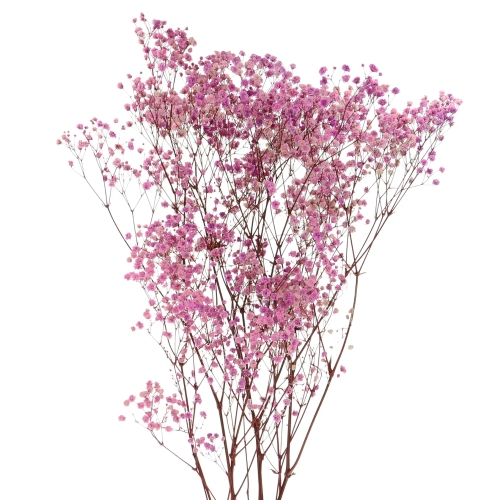
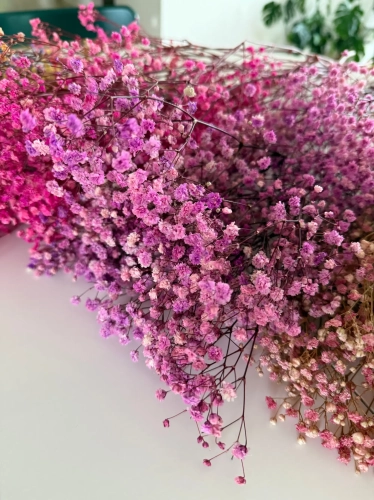
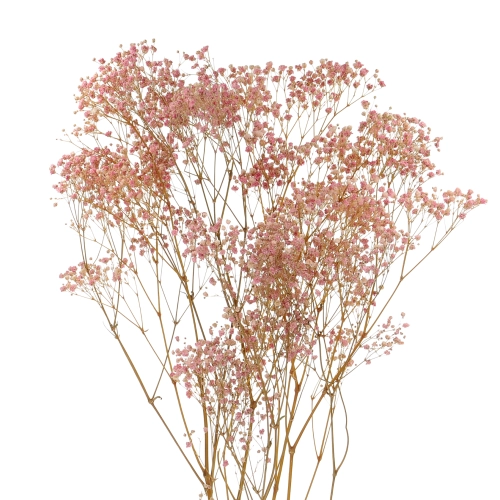
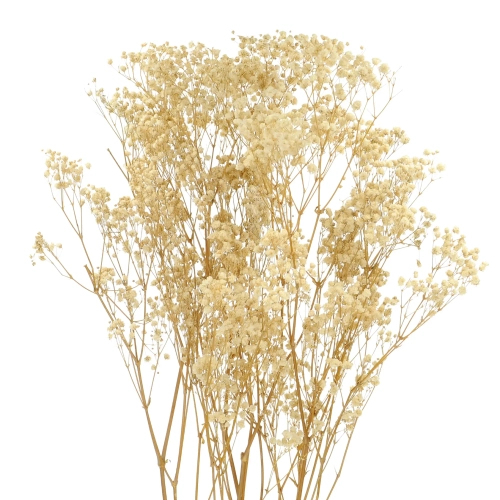
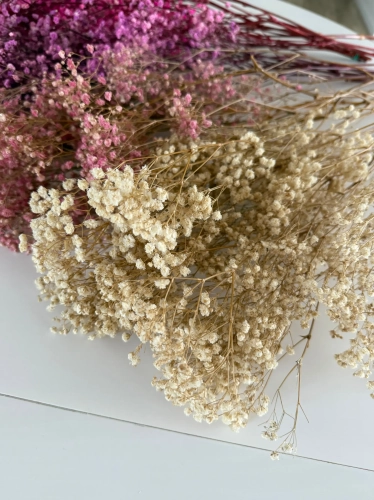
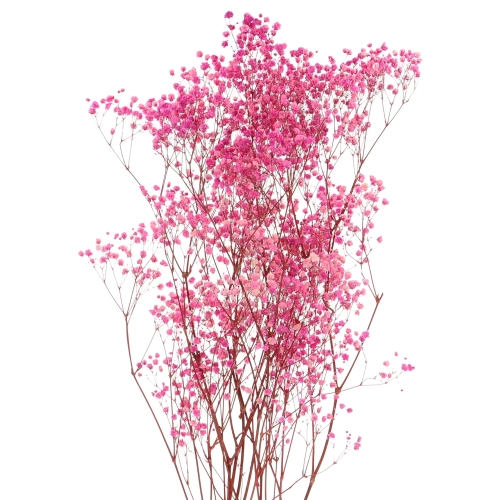
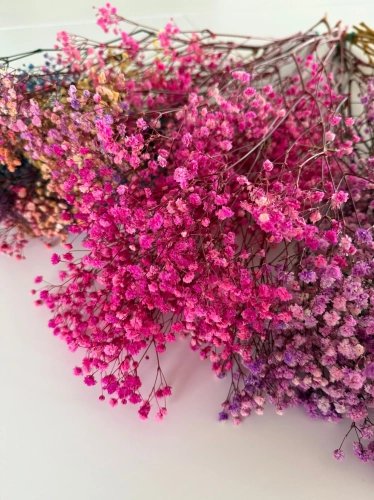
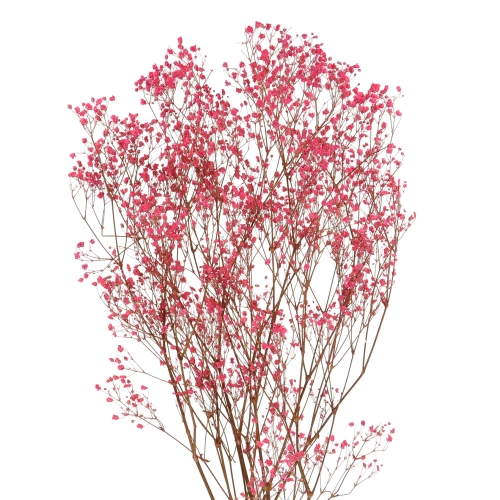
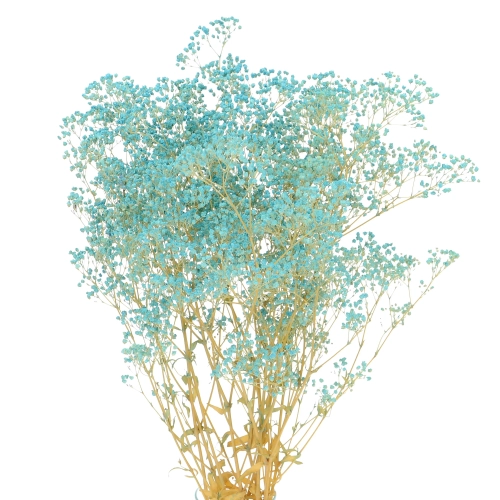
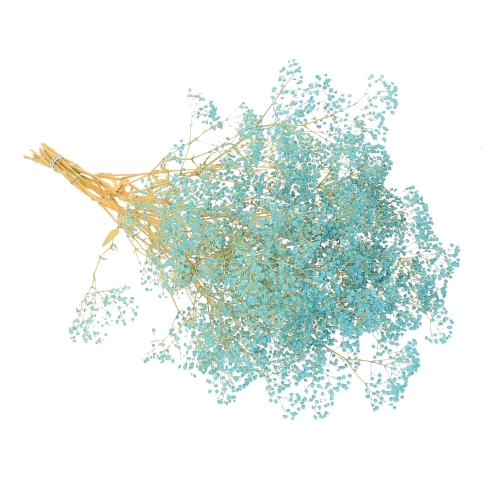
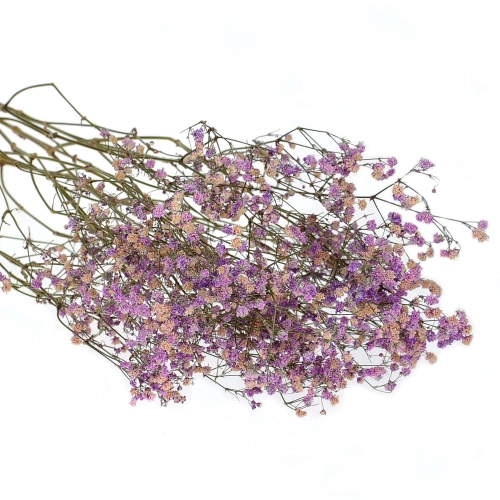
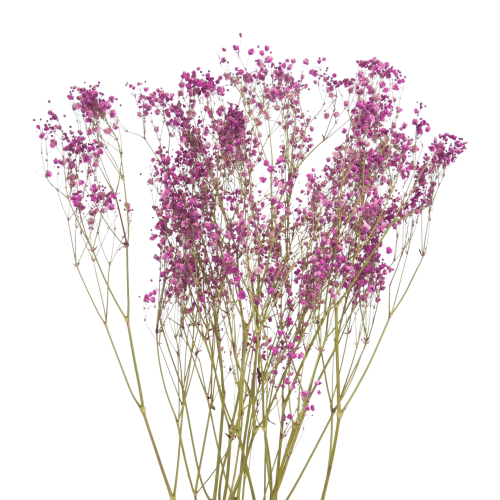
At Blosmi, dried and preserved gypsophila is available in various colours. In addition to white, we offer gypsophila with pink, purple or fuchsia flowers. A bouquet of coloured gypsophila is also of great interest to florists, opening up a multitude of decorative possibilities - also for decorations created in a modern style.