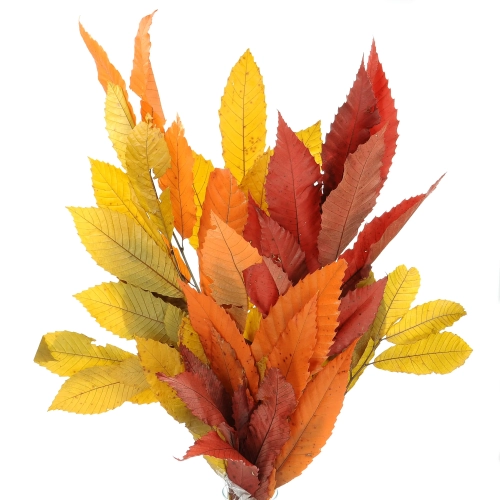
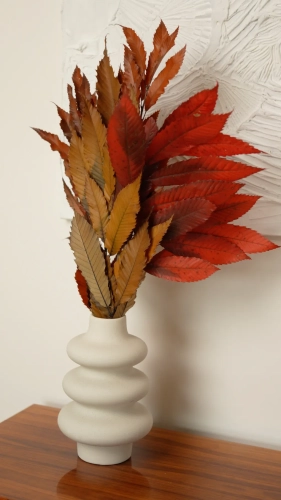
The flame of autumn - the beauty of chestnut leaves
The chestnut tree (Latin: Castanea), although often confused with the horse chestnut tree, is a tree of equal charm. However, its leaves have a completely different, characteristic shape. They are single, large and oblong, with a distinctly lanceolate form. Their edges are characterised by sharp and deep serrations, which give them a dynamic and noble appearance.
The surface of the leaf has a clearly marked network of veins, giving it an interesting texture. The twigs on which they are attached have a solid, woody structure. Although they delight with their green colour in summer, it is in autumn that they show their full beauty. It is in this fiery autumn display that they are immortalised.
Time frozen in plants – how does stabilisation work?
The stabilisation process is a technique that allows nature to remain unchanged for many months. It applies only to real, living plants. Carefully selected chestnut twigs are cut at the best moment, when their leaves are in the best possible condition. The plant then undergoes a special process. The natural juices circulating in the tissues are replaced by a stabilising fluid.
Its formula is based on glycerine. Importantly, it does not dry out the leaves, which could make them brittle and fragile. On the contrary, thanks to glycerine, chestnut leaves retain their original elasticity and natural softness, and thanks to the addition of dye, they also retain their vivid, saturated colours.
They look as if they have just been brought in from an autumn park. Frozen in time, authentic in appearance and touch, they are also completely maintenance-free. Preserved chestnuts do not need sunlight, so they can decorate even the darkest corners of your home. They do not need to be watered, sprayed or fertilised. Placed in the right spot, they will not lose their colour or wilt. They are a perfect way to enjoy the true colours of nature in places where it would be difficult to keep plants.
Chestnut leaves at home - inspiration and ideas
Preserved chestnut twigs are a wonderful and very charming decorative material. Available in whole bouquets in yellow, orange, red or brown, they are a ready-made, stand-alone decoration. Just put them in a vase to instantly bring a warm, autumnal mood to your interior.
Their large, distinctive shape and rich, warm colours make them a strong accent in any arrangement. They are also an excellent base for larger floral compositions. They instantly add volume, interesting texture and a noble character. They can serve as a backdrop for dried grasses and flowers or play a leading role in minimalist arrangements. In addition, they are indispensable in creating durable wall decorations, such as wreaths and garlands, bringing a touch of forest magic into the home.
Which plants complement chestnuts best?
Large, colourful chestnut leaves are very malleable and work wonderfully with other materials. They create a magnificent backdrop for other preserved plants and dried flowers. Their warm, rich colours harmonise beautifully with natural beiges and browns.
The combination of chestnut twigs with preserved ruscus or delicate spikes of lagurus is exceptionally stylish and cosy. It is also worth combining them with plants of contrasting shapes, such as small leaves of preserved eucalyptus, which introduce lightness to the composition and break up the warm palette. In addition, chestnut leaves go perfectly with raw materials such as natural wood, stone, architectural concrete and linen fabrics.