Chasmanthium
Chasmanthium latifolium is a grass belonging to the Poaceae family. It is a rhizomatous perennial native to North America. The plant also inhabits other areas of the world, mainly as a species cultivated in gardens and flower beds. Dried chasmanthium is also valued by florists and craft enthusiasts. Its original inflorescences are perfect for complementing a variety of compositions – from classic bouquets and rustic wreaths to impressive floral installations.
What does chasmanthium look like?
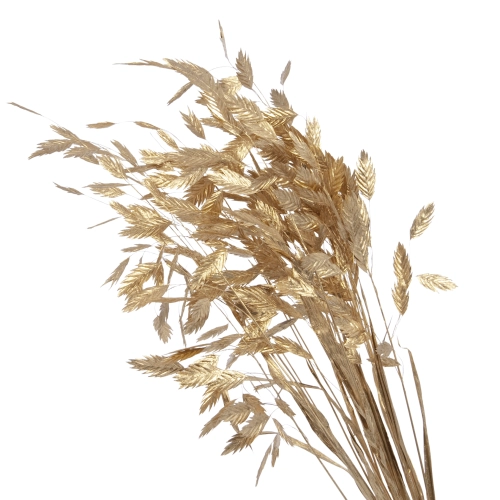
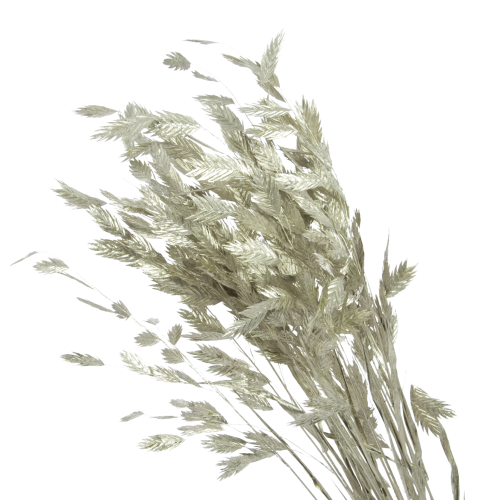
Chasmanthium is classified as a tall grass – it grows up to 1.2 m, and during flowering it often reaches a height of up to 2 m. Its characteristic feature is its long lanceolate leaves. Arching downwards, they form impressive clumps, resembling bamboo leaves. At the end of summer, the grass develops flowers gathered in spike inflorescences at the tops of thin, overhanging shoots. The spikelets of the chasmanthium are flattened, oval-shaped and have strongly serrated edges, which gives them a very original appearance. For drying, immature inflorescences should be collected, as they will retain their shape for a long time and will not fall apart. An interesting fact is that due to the appearance of the inflorescences, similar to avena flowers, chasmanthium is often called northern or river oats.
Chasmanthium in natural conditions and in cultivation
In natural conditions, chasmanthium inhabits areas of North America. It is found in meadows, forest clearings and on the banks of water reservoirs. It is a very popular plant in its native environment.
On other continents, including Europe, chasmanthium is known as a cultivated plant. It is increasingly found in gardens, squares and flower beds. It goes well with various species, allowing for interesting arrangements. Another advantage is that it is easy to grow. Chasmanthium grows well in any garden soil, although it prefers fertile, humus-rich soil with good permeability. It is best to find a sunny spot for it. It is also worth ensuring that the soil is constantly slightly moist, which will prevent the leaves from dying and turning yellow. It is also worth remembering that broadleaf hellebore tolerates low temperatures well. However, it is recommended to protect it from frost in winter.
The use of chasmanthium
Chasmanthium is ideal for creating flowerbed compositions. It looks great with various plant species, offering enormous arrangement possibilities. It is usually found in the company of coneflowers, rudbeckia, phlox, speedwells and daylilies. It also creates excellent combinations with other grass species. It looks great as a solitary plant. Chasmanthium can be planted around ponds or along the edges of paths. It is a suitable choice for modern, rustic and naturalistic gardens. Due to its similarity to bamboo, it also works well in Japanese gardens.
Dried chasmanthium in floristry
Dried chasmanthium on the other hand, provides a wealth of floral inspiration. It looks great on its own in modern spaces – placed in a minimalist glass vase. It perfectly complements dried flower arrangements that fit into traditional and rustic interiors, as well as spaces decorated in a boho or shabby chic style. Chasmanthium goes well with popular phalaris, lagurus and nigella, as well as more exotic species such as cotton, eucalyptus and palm leaves. It can be easily combined with eryngium or lunaria. In silver and gold colours, chasmanthium will complement Christmas and special occasion bouquets, especially compositions created in winter.
Grass is suitable not only for creating bouquets of dried or fresh flowers. It also works well as a complementary element in decorative wreaths. It can be found in Easter palms. Grass is also valued by handicraft enthusiasts. Individual spikelets look beautiful on greeting cards. They can be embedded in resin or wax, woven into macramé or used to embellish 3D plant paintings.
Dried chasmanthium at Blosmi
Blosmi offers a bouquet with shoots reaching a height of approx. 70 cm. One bunch contains 5 sprigs of the plant. All dried grasses and flowers are carefully packaged and secured for transport.