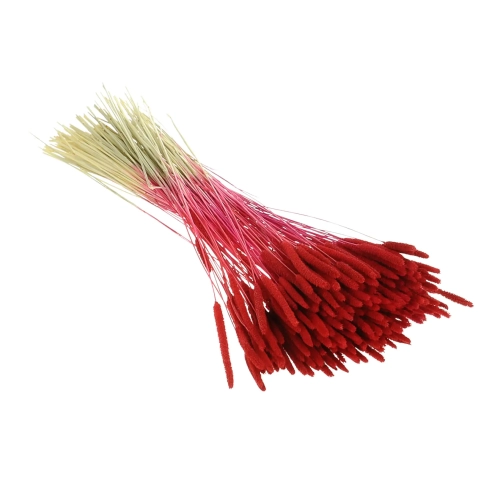
Dried Timothy grass
Timothy (Phleum pratense) is an herbaceous plant of the panicle family. In Europe it is a common species found in meadows, pastures, wastelands and ruderal areas. The most impressive part of the plant is its spike-shaped panicles. Both in their natural and dyed form, they are prized by florists - perfect for complementing bouquets of fresh and dried flowers. They also work well for craft enthusiasts.
What does Timothy look like?
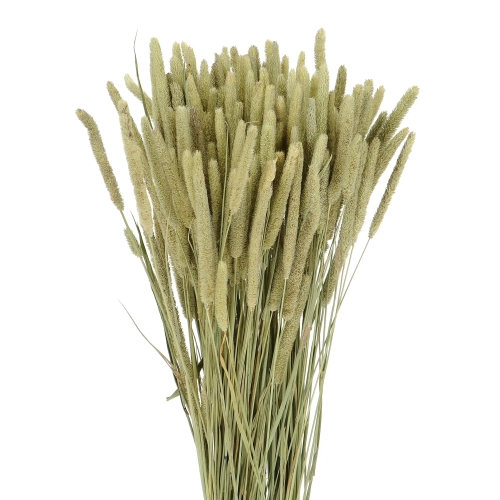
Timothy is classed as a tall grass forming loose tufts. Its stems can grow to a height of 150 cm. The plant has a stiff, straight stem with a tuberous thickening at the base. The leaves are initially curled into buds. When developed, they take on a lanceolate form and a grey-green colour. They are dull and rough. On the generative shoots, Timothy develops a spike-shaped panicle 3 to 30 cm long and about 1 cm thick. The inflorescence consists of small, single-flowered spikelets with bony appendages. The fruit of Timothy is the seeds, which fall out of the husks very easily, causing the plant to spread spontaneously.
Timothy in the wild and in cultivation
Meadow thyme is a very popular species in Poland and Europe. This is due to its low requirements for growing conditions. The plant grows well in both fertile and fairly poor soils. It prefers sunny positions, but is also commonly found in shade. It is a hardy species - it tolerates snow cover well, as well as very cold, snowless winters. However, it is sensitive to soil salinity and drought.
Timothy is usually found growing wild - in meadows, wastelands, roadsides or ruderal areas. However, it is worth bearing in mind that it is also a cultivated species. It is usually sown in pastures because it is resistant to trampling and biting.
Use of Timothy
Timothy has been used on farms and in animal husbandry for many years. It has an excellent mineral composition, so it is ideal as a forage crop. It is also used for sodding on slopes in moderately wet areas. In recent years, timothy has also been found in gardens. The plant looks beautiful on the edges of paths and rockeries.
Dried timothy in floristry
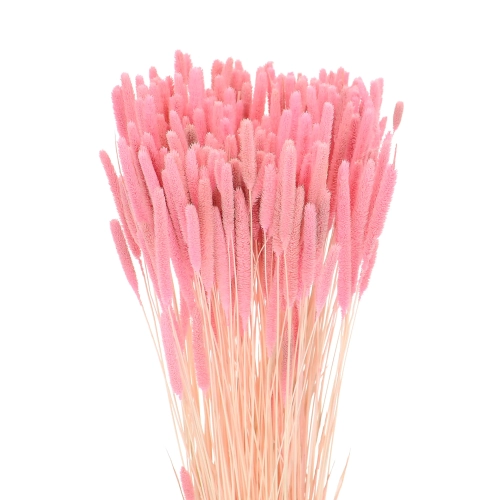
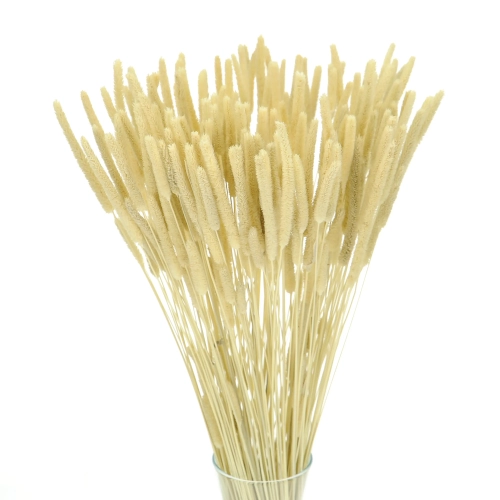
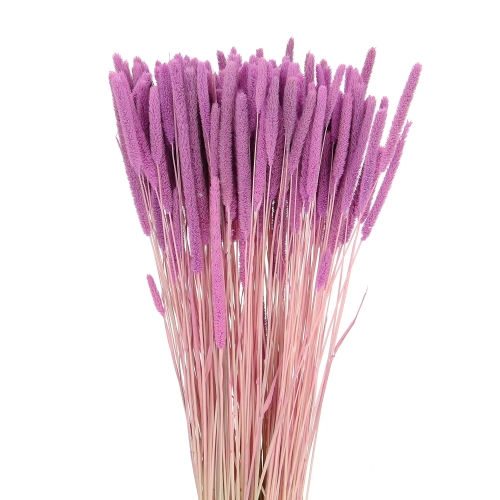
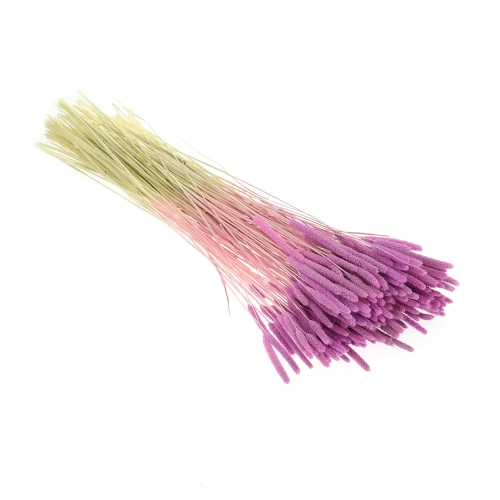
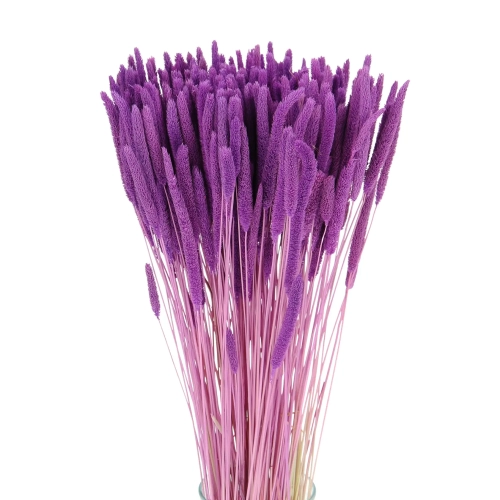
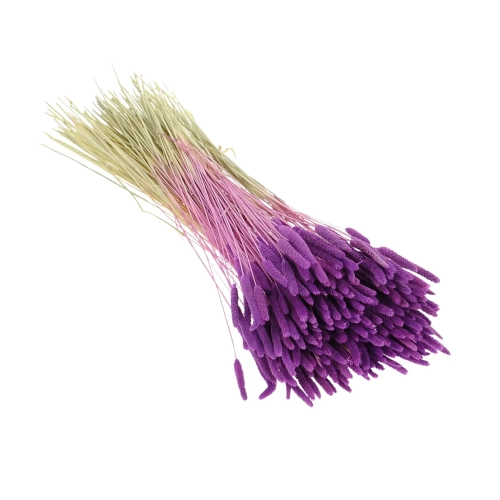
With its showy, cylindrical panicles, dried timothy is also widely used in floristry. It is an excellent addition to bouquets of dried plants and fresh flowers. It goes well with almost all types of plants. It is suitable for rustic and modern compositions. It looks effective in both space-decorating bouquets and special occasion compositions. It can be used to create garlands. Importantly, dried timothy usually comes in variants dyed in a variety of colours, which increases the spectrum of its use and provides plenty of creative inspiration. The spikey timothy panicles are also prized by those who enjoy handicrafts. They are great for decorating greeting cards, creating floral pictures or for weaving into macramé.
Dried Timothy at Blosmi
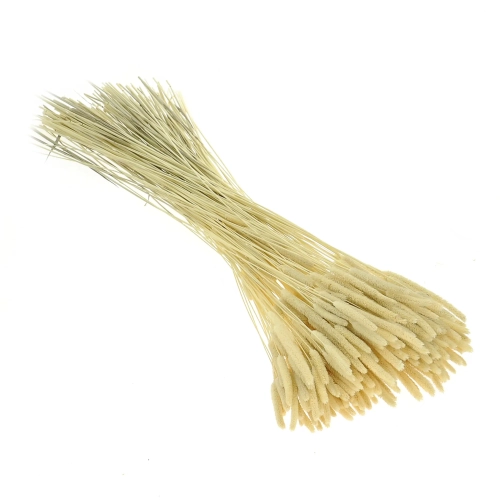
At Blosmi you can find dried meadow timothy in many colours. The bunches consisting of numerous inflorescences come from Polish cultivation and are distinguished by their excellent quality. All plants are carefully protected and packed for transport.