Gomphrena
Gomphrena globosa, also known as globe amaranth, is an annual species included in the amaranth family. Approximately 70 varieties of the plant are known - both with a tall and a low habit. The homeland of gomphrena is Central America, mainly Guatemala and Panama. Today, however, the species is found in the wild in most tropical countries. In Europe, gomphrena is a plant grown exclusively in gardens or pots. Not only does it adorn flowerbeds, windowsills, balconies and terraces wonderfully, but it is also great for dried bouquets. It is also worth noting that gomphrena is renowned for its medicinal properties.
What does gomphrena look like?
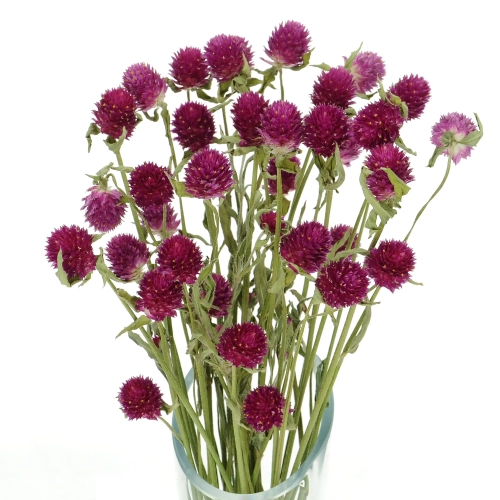
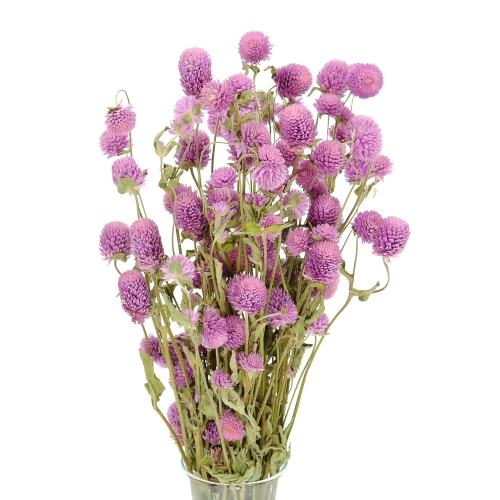
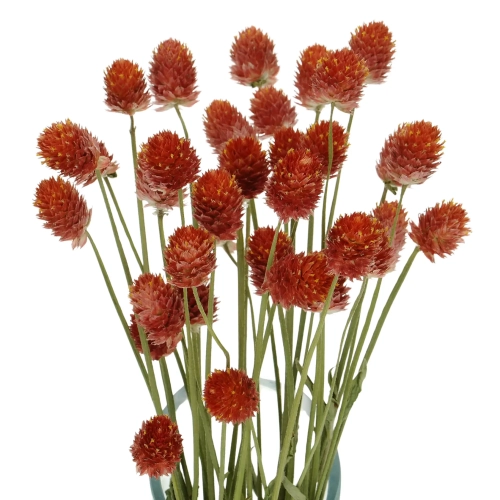
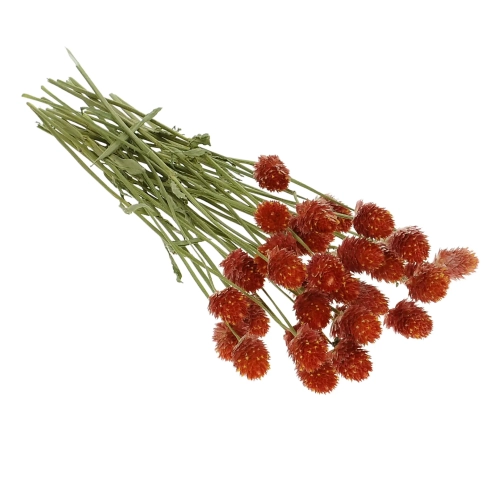
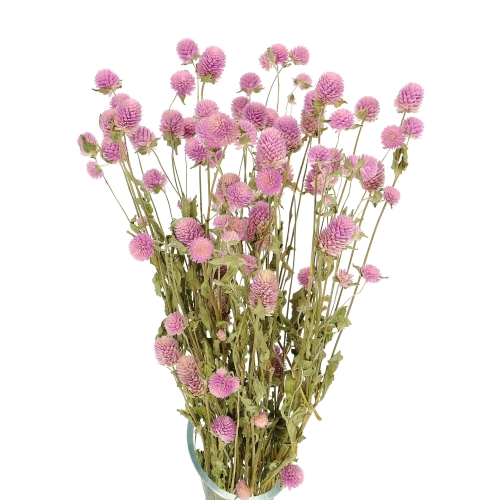
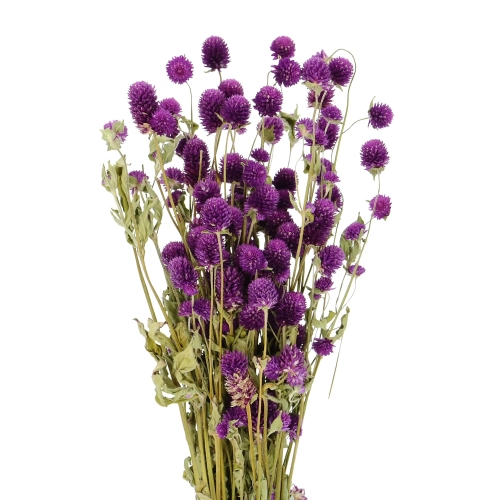
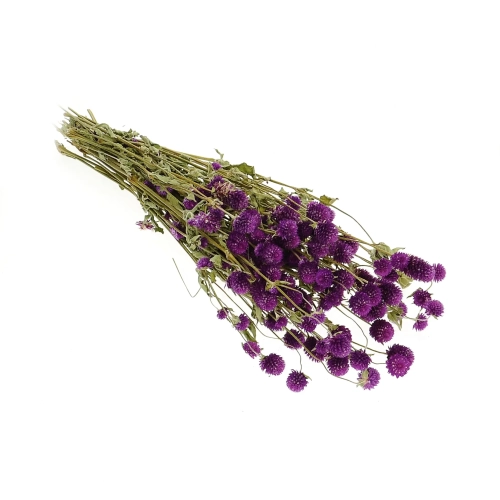
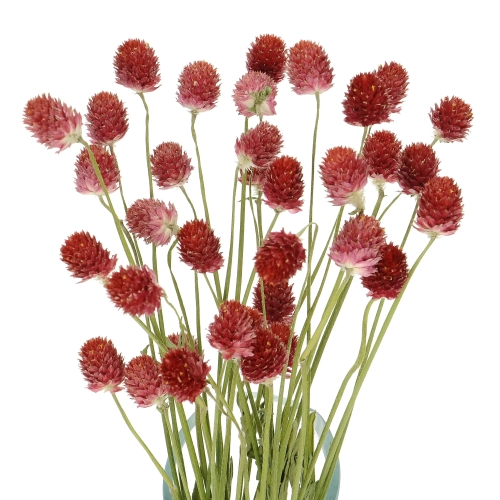
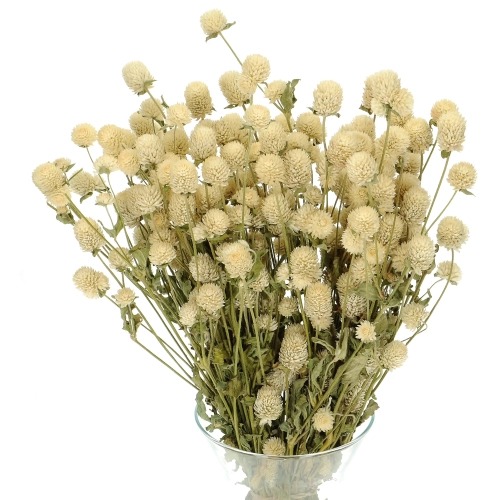
Gomphrena is characterised by its bushy habit. It has a stiff, branching stem, which can reach a height of up to 70 cm. Lanceolate leaves emerge from the stem. Depending on the variety, they can be blunt or pointed and covered with fine hairs. What catches the eye, however, is the ball-shaped inflorescence. In fact, it is made up of many tiny flowers and brightly coloured inflorescences, which makes it look very impressive. It is worth mentioning at this point that the hyphae have a dry, papery texture, making gomphrena an excellent species for drying. It usually comes in purple, pink or white, although bicoloured varieties are also found. The plant also occurs in a dwarf form.
Gomphrena in the wild and in the garden
Under natural conditions, gomphrena grows on well-sunlit forest edges or mountain slopes. Additionally, it is found in ruderal areas, fields and fallow land. In Poland, the plant is not found in the wild. However, its cultivation is not difficult and can produce excellent results. Gomphrena is an excellent attractor for butterflies - rivalling Budlea in this respect, which of course adds to its aesthetic value. It looks great in flowerbeds. Flowers from June to November. After cutting and drying, it can be used as a vase bouquet - especially as it retains its natural colour after drying.
To give the plant the best conditions for growth, it is advisable to plant it in a strong sunny spot. This way it will bush out beautifully and develop numerous flowers. Gomphrena has no special soil requirements, although it grows best in humusy, semi-permeable soil. It does not require successive fertilisation. However, it is worth bearing in mind that it is a species that does not tolerate stagnant water. It tolerates temporary drought much better, although regular watering of the gomphrena is recommended if the soil dries out severely. Tall varieties of the plant will do well in flowerbeds. Dwarf gomphrena, on the other hand, is often used for planting rockeries. It will do well in pots and boxes.
Use of gomphrena
Gomphrena is a multifaceted plant. On the one hand, it looks great in flowerbeds, on the other, it is straightforwardly made for drying. The cut flowers are best dried using the herbal method in an airy room away from direct light sources. They can then be used to create beautiful bouquets - both for decorating the home and for special event venues. Particularly noteworthy are varieties with intensely coloured flowers, bringing a strong accent to any space. They look beautiful in interiors arranged in traditional as well as modern and even palace style. The gomphrena can also be used for other decorations - hanging floral compositions, garlands or compositions under a glass dome. It looks great solo or in combination with other dry flowers: glixia, limonium, lunaria, helichrysum, ammobium or gypsophila. It can also be boldly combined with linum or grains. In Hawaii, the beautiful, colourful balls of gomphrena are used to make necklaces, and in India for wedding decorations. In Polynesia and Nepal, the flowers are used to make striking garlands.
Gomphrena in natural medicine
However, the benefits of globular gomphrena do not end there, as the plant is used in natural medicine. An infusion made from its flowers has antiseptic and cleansing effects. It also has a calming effect, getting rid of stress and tension. In addition, it is rich in antioxidants. It kills free radicals, delaying cellular ageing processes. An infusion of gomphrena helps regulate blood pressure.
Dried gomphrena at Blosmi
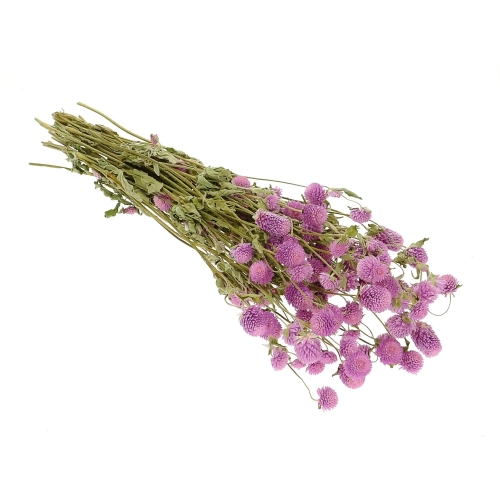
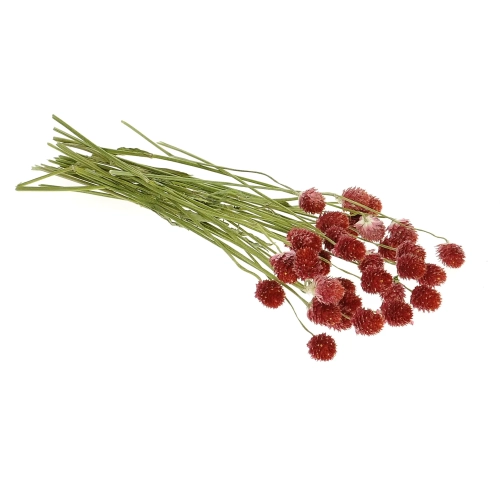
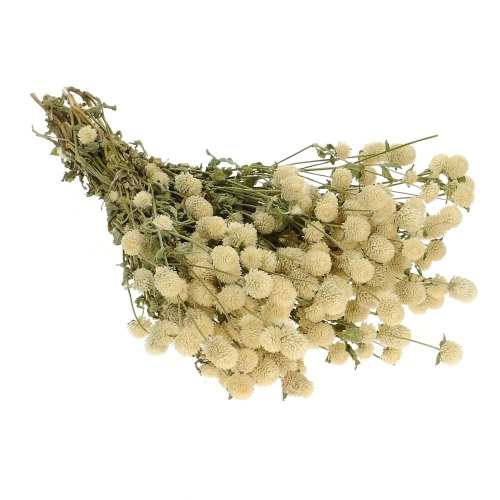
Dried gomphrena exclusively from Polish cultivation is available at Blosmi. There are approximately 30 sprigs per bundle, not exceeding 40 cm in height. There is a choice of lilac, pink and purple flowers. All dried flowers are carefully packed and protected for the journey before being sent to the indicated address.