Wheat
Wheat (Triticum) is an annual grain belonging to the Poaceae family. It originates from south-western Asia. Alongside barley, it is considered one of the oldest cultivated grains, known since ancient times. Today, wheat is found on almost all continents except Antarctica. It is also cultivated in Europe. And although it is known primarily for its practical properties, florists also value it for its aesthetic qualities, adding it to various floral compositions – not only bouquets, but also wreaths, glass decorations and other ornaments.
What does wheat look like?
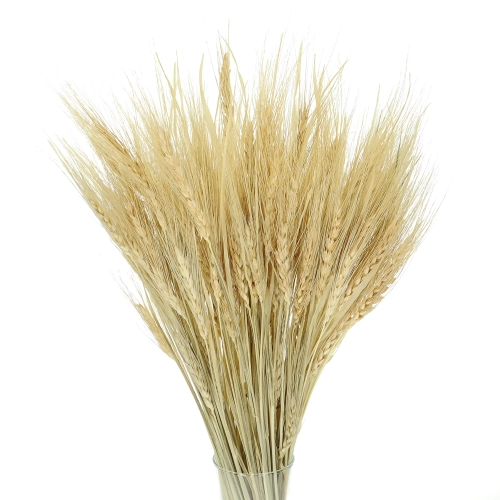
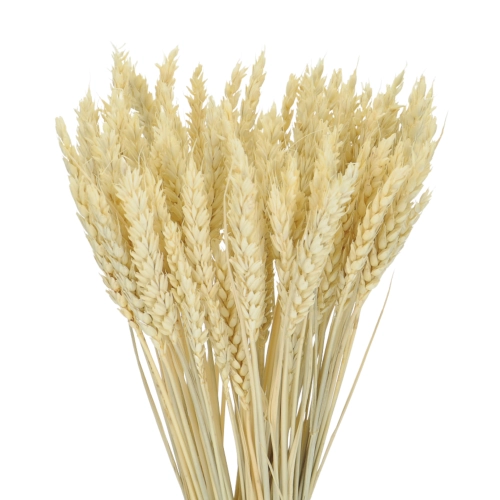
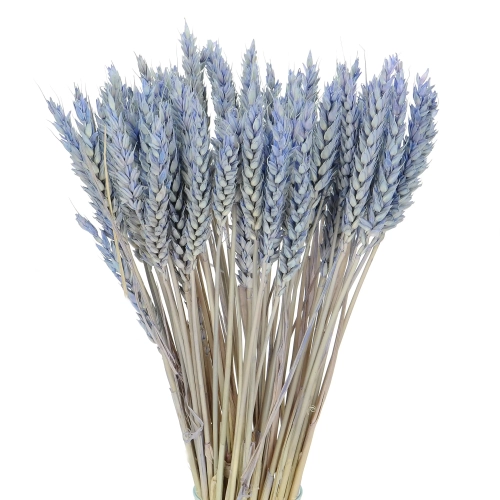
The most noticeable feature of wheat is its stalk, which grows to a height of approx. 150 cm and has slightly rough nodes. At the top of the stalk, the plant develops flowers gathered in a four-sided spike, which consists of several spikelets. The latter usually have four flowers. The spiny upper glumes give wheat an interesting appearance and a feeling of lightness. When ripe, the plant develops fruits in the form of grains. Wheat leaves are inconspicuous, narrow and arranged alternately.
Wheat in cultivation and in natural conditions
Wheat has been known as a cultivated grain for centuries, although there are also wild varieties that grow in meadows and wasteland. It is found almost everywhere on Earth, except for Antarctica. It is also not found in the tropics.
Of all grains, wheat is the most demanding in terms of growing conditions. It prefers sunny locations and fairly fertile, well-drained soils with a stable pH between 5.3 and 7.3. The species also requires adequate irrigation - it does not tolerate drought or waterlogging well. It can be grown as a winter or spring grain. In the former case, it can survive temperature drops of up to -30 degrees Celsius. It germinates at above-zero temperatures. For growth and development, it needs temperatures above 10 degrees Celsius.
The use of wheat
For thousands of years, wheat has remained one of the most well-known crops. Its grains are used to produce flour, which is then used for baking or making pasta. Wheat is also used to produce groats and breakfast cereals, which are part of a healthy and balanced diet. Its grains can be used to produce alcoholic beverages. Wheat is also grown for animal feed.
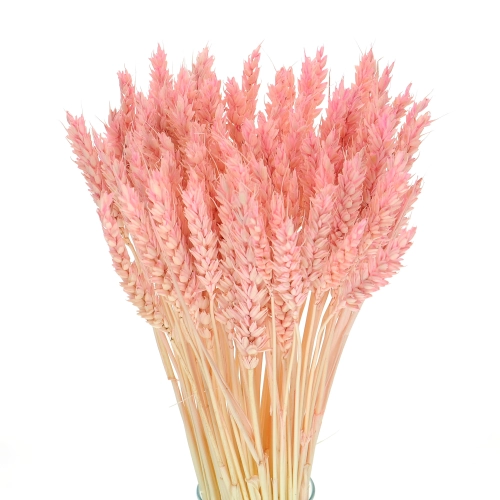
The functional properties of wheat go hand in hand with its decorative qualities. Its impressive, thick ears topped with hairs are highly valued by florists. They fit perfectly into compositions made of both fresh and dried flowers, giving them a beautiful, idyllic and natural character. Dried wheat is particularly suitable for seasonal bouquets – summer and autumn. It goes well with avena, phalaris and sorghum. In this combination, it allows you to create beautiful, rustic compositions. They can be combined with limonium, safflower or anaphalis. Dried ears of wheat look beautiful when accompanied by nigella, gomphrena, echinops or thistle. In this version, they create bouquets with a touch of modernity. There is also nothing to prevent you from combining them with other dried grains and grasses.
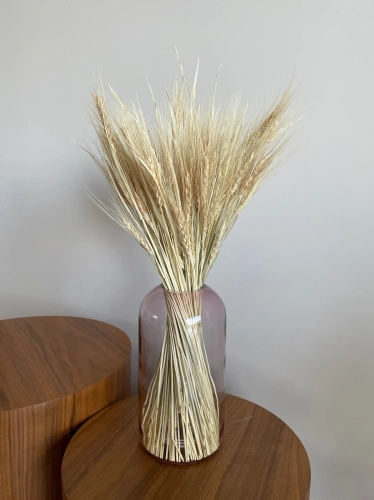
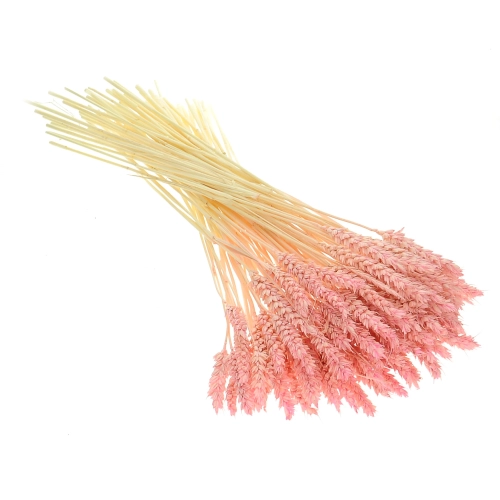
Dried wheat can be tied into bunches and placed in vases - glass, ceramic or in bundles tied with jute string. The bleached version will fit perfectly not only into traditionally decorated spaces and rustic arrangements, but also into modern interiors. Dried grain is also a wonderful material for craft enthusiasts. It is perfect for making wreaths. It can be used to make greeting cards. Dried ears of wheat look beautiful encased in glass or in 3D compositions.
Dried wheat at Blosmi
Blosmi offers dried wheat with stems reaching approx. 40–50 cm in height. The bunches weigh approx. 80 grams, which corresponds to approx. 60 ears. All plants are carefully packed and secured for transport.